



How Reconnecting with the Outdoors Restores Mind, Body, and Soul
If you held a gun to my head and told me I could only give one piece of advice to improve your health and well-being, it would be this: Spend time in nature. Period. The End.
Rearrange your life to be outdoors as much as humanly possible and watch every metric of your mental and physical health improve. Seriously, it’s not much more complicated than that.
I happened upon this revelation almost by accident. Until about a year ago, I spent the vast majority of my time indoors; maybe you can relate. I went walking outside a few times a week, but otherwise all my time was spent in my home, office, or car. The transitions between them were the sum total of my exposure to nature.
Sun and the elements were my enemy. Better to just stay indoors where it was safe and comfortable. But then I started gardening.
My Accidental Reboot
I put it in a garden last spring not because I was particularly passionate about eating food I had grown (though that is a wonderful benefit not to be ignored), or because I was trying to spend time outdoors, but because I was trying to be intentional about spending time off of screens.
Some of you will remember about a year ago I decided to get off Instagram after realizing I was literally wasting my life going from reel to reel, post to post. I didn’t want to live that way any longer.
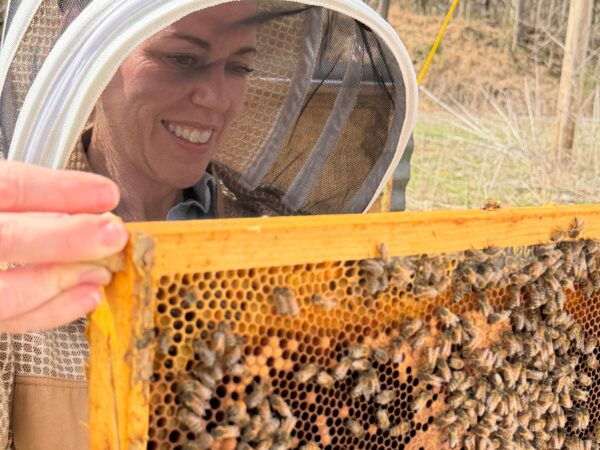
Since the addiction was strong I knew I had to replace it with something that would be involved enough to wrap my attention. I chose a large garden—five 4×8-foot raised beds, plus a pollinator flower garden to attract bees and butterflies, and a smaller bed for strawberries and thornless blackberries—because it would require me to tend to it regularly. My goal was to spend 30-60 minutes caring for my plants each day in the growing season.
But a funny thing happened as I was tending my garden: I was also spending time outdoors, and the more time I spent in nature, the better I felt.

I didn’t take my phone or listen to podcasts while I had my hands in the dirt. I just gardened. I listened to the birds, watched the bees going from flower to flower, waved at the neighbors passing by, and felt the cool pebbles under my bare feet.
On a stressful day with the kids or the business, if I just spend 10–15 minutes in the garden, I could come back inside a new person. I can’t explain it!
Thankfully, science can.
‘Balm for Our Busy Brains’
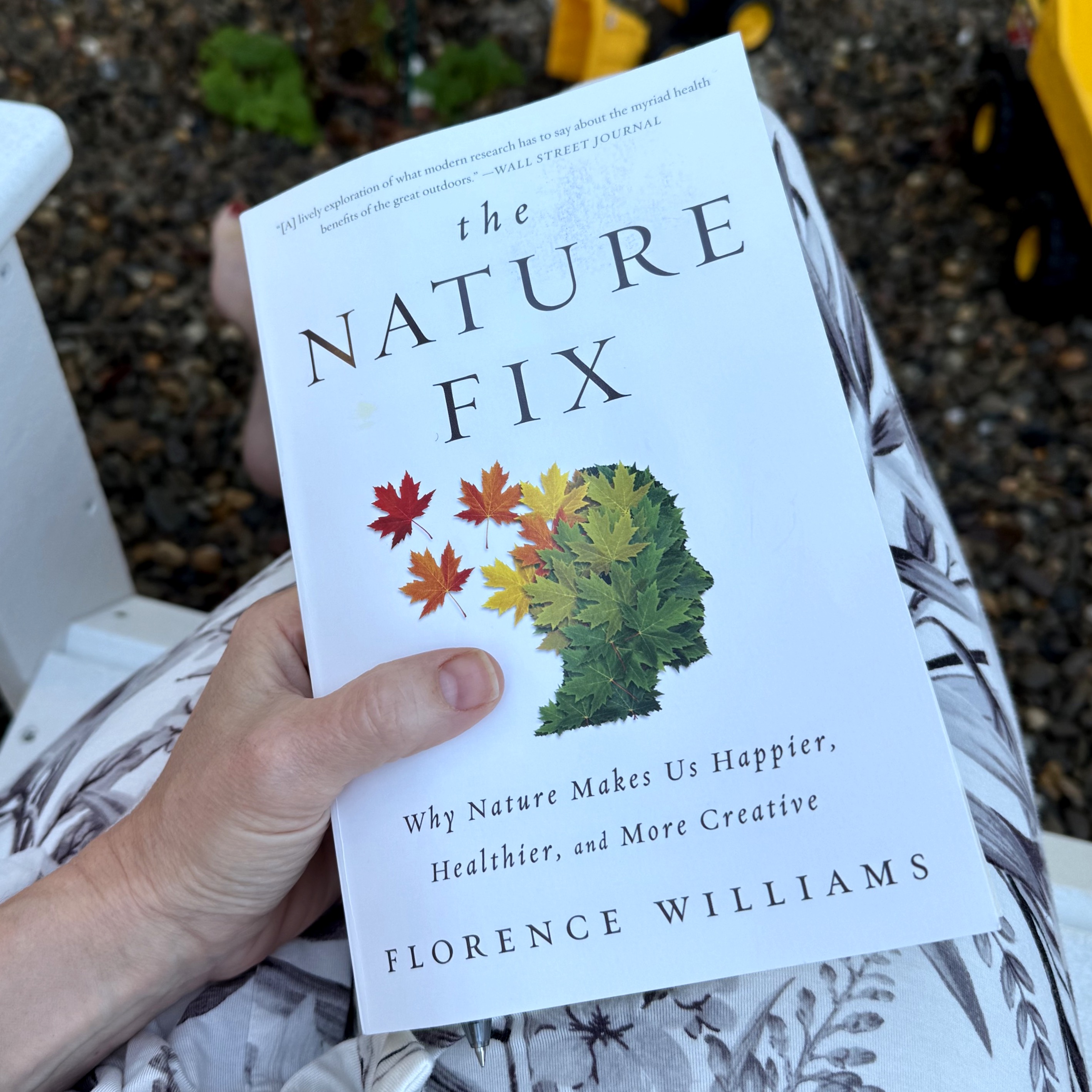
One book I’ve taken as a guide in this season is Florence Williams’s The Nature Fix: Why Nature Makes Us Happier, Healthier, and More Creative. “We don’t experience natural environments enough to realize how restored they make us feel,” she says, “nor are we aware that studies also show they make us happier, healthier, more creative, more empathetic, and more apt to engage with the world and with each other.”
Kristin Weir, a journalist writing for the American Psychological Association, reviewed several scientific studies on the positive effects of nature on human wellbeing from its cognitive benefits to those on happiness. “Spending time in nature can act as a balm for our busy brains,” she says. Sounds promising, right?
“Contact with nature,” says Weir, citing analysis of available research, “is associated with increases in happiness, subjective well-being, positive affect, positive social interactions, and a sense of meaning and purpose in life, as well as decreases in mental distress.”
All for absolutely no cost with absolutely no negative side effects! Can you imagine?
Researchers have developed several theories for why nature works on us this way. Weir mentions three:
The biophilia hypothesis argues that since our ancestors evolved in wild settings and relied on the environment for survival, we have an innate drive to connect with nature. The stress reduction hypothesis posits that spending time in nature triggers a physiological response that lowers stress levels. A third idea, attention restoration theory, holds that nature replenishes one’s cognitive resources, restoring the ability to concentrate and pay attention.
Of course, as Weir notes, it’s probably a mix of all three.
Williams says most of us suffer from what journalist calls Nature Deficit Disorder, defined as “what happens when people spend little or no time outside in natural environments, resulting in physical and mental problems including anxiety and distraction.” This was me.
Do we need science to tell us this—or have we always known and simply forgotten? Williams points to the insights of famed landscape architect and mastermind of Central Park, Frederick Law Olmstead, who states that viewing nature, “employs the mind without fatigue yet exercises it; tranquilizes it and yet enlivens it and thus, though the influence of mind over the body, gives the effect of refreshing rest and reinvigoration to the whole system.”
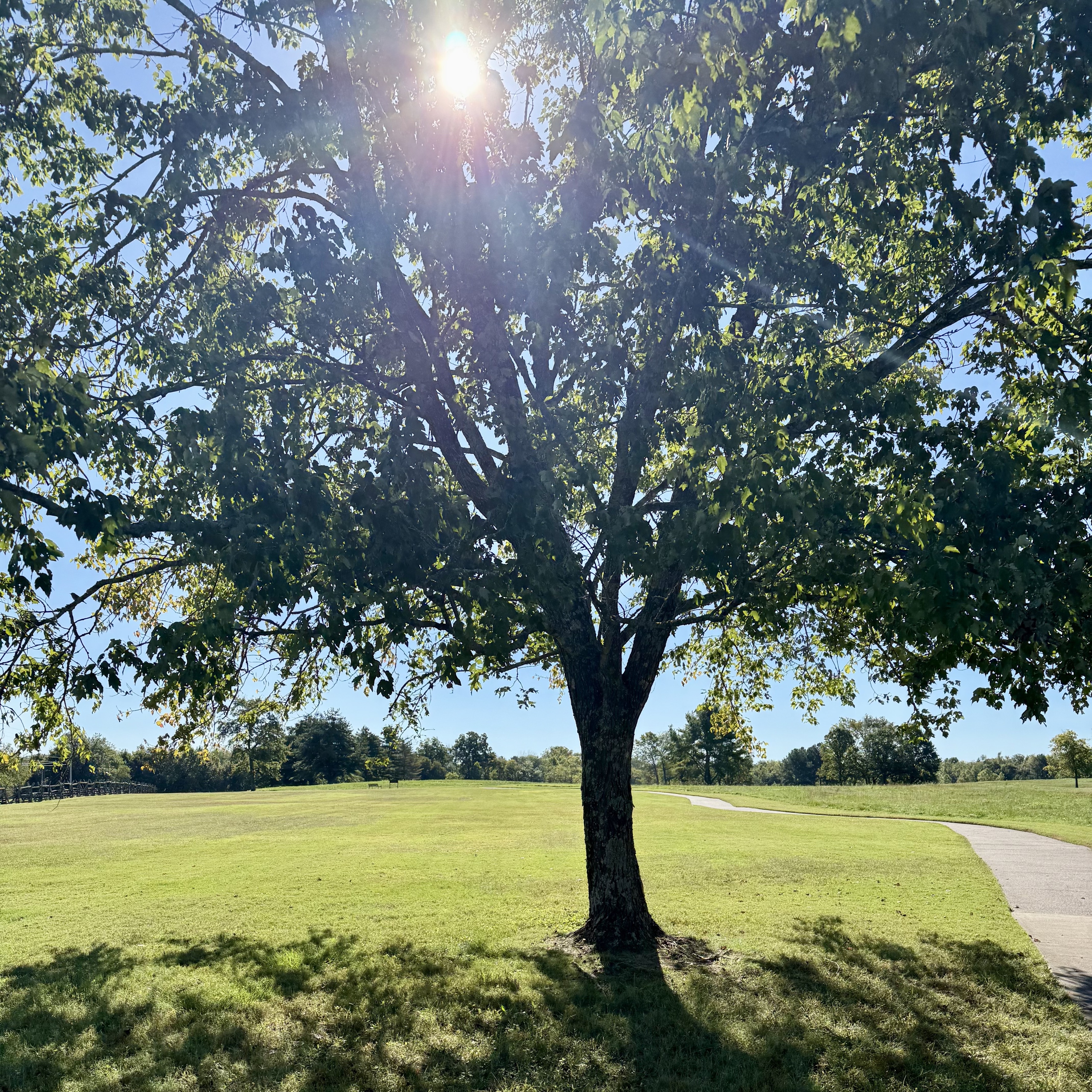
That is exactly what I experienced. My mind was refreshed by nature. And not just my mind—also my body.
If you’re new, subscribe so you don’t miss next week’s post. We’re on this journey toward a more peaceful, purposeful life together.
Our Native Habitat
In recent months, I’ve been exploring what scientists call circadian biology—essentially how our bodies and health are regulated (or dysregulated) by circadian rhythms or disconnection from them. Our bodies are uniquely designed to be calibrated by inputs from our natural environment, most importantly the sun and seasons. And when we don’t live according to them, we suffer for it.
For example, in order to fall asleep easily and sleep soundly, our eyes need early-morning and late-evening sun to tell our brains when to turn off and on. If we’re indoors all the time, exposed to nonstop, artificial blue light and screens, our brains and biology can get confused, which is a setup for dysfunction. And we all know if there’s one thing you don’t want to be dysfunctional in your life, it’s sleep.
When we live the vast majority of our lives in a built environment with artificial light and more and more of our lives mediated through screens and synthetic experiences and relationships, we find ourselves sick, anxious, lonely, and exhausted.
I have found this is true in my own life, by the way—even if I’m not working too much, and even if I’m exercising and eating well. Those things simply aren’t enough to counteract the effects of living incongruently with our native habitat: nature.
Too much time indoors leaves us feeling like an orca in a tank at SeaWorld—heartsick, homesick, and physically sick living in an environment we aren’t made for.
My Daily Nature Diet
After realizing how much a small amount of time in my garden each day positively affected me, I started looking for other ways to get more nature in my life. While this may sound like a lot, it doesn’t feel hard. It’s not the result of discipline. In fact, the more I get outdoors, the more I want to be outdoors. I never felt better, but I also never feel better than when I’m outside—so desire not discipline compels me to go.
Here’s how that looks now:
Morning Ritual in the Garden
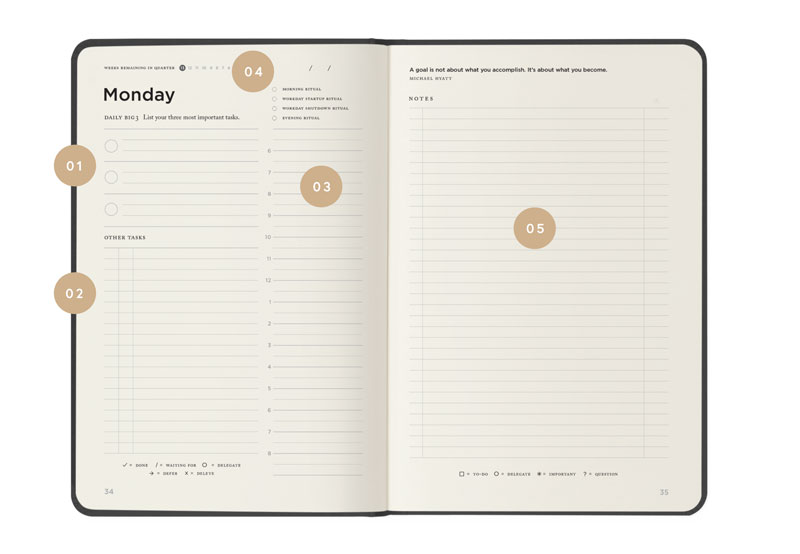
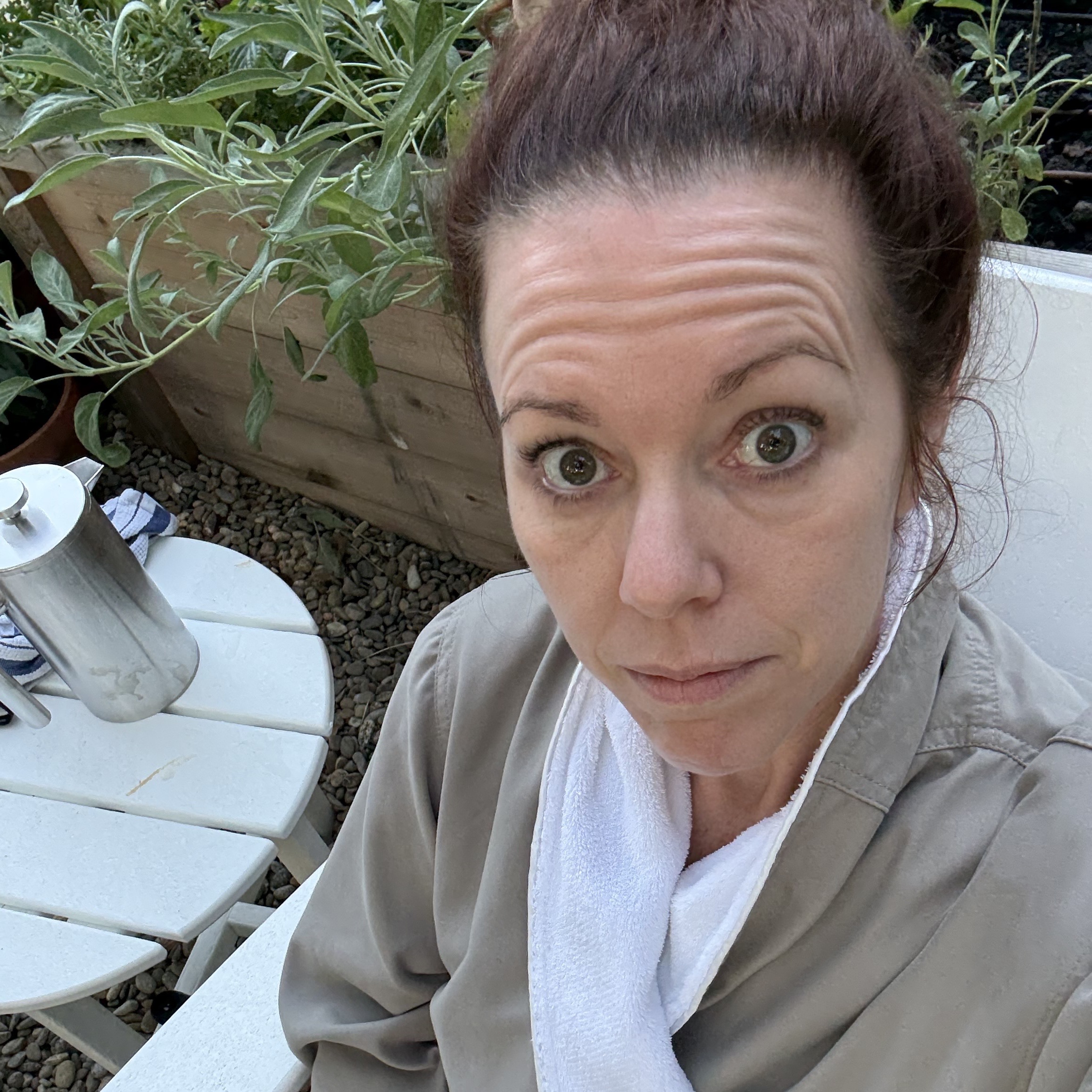
Each morning, I take my dogs, coffee, devotional, sometimes a book, and my Full Focus Planner out to the Adirondack chairs in my garden. Fortunately for me, those chairs face east, so I get lots of early morning sun while I enjoy my morning. I also go out barefoot, unless it’s really cold, so I can get sensory input through my feet and also the positive electrical input from grounding (bare feet on natural surfaces).
Sometimes I spend 15–20 minutes outside, sometimes an hour or more, depending on what’s on my plate. Regardless, this time gives me the calm and clarity I need to start my day right.
Morning Walk
While I have always been a walker, this year, I have discovered the joy of walking slowly. Each morning, I go out for about 45 minutes to an hour to walk in our neighborhood or a nearby park. If I’m feeling really ambitious, I even take my shoes and socks off and walk barefoot in the wet grass along the road.
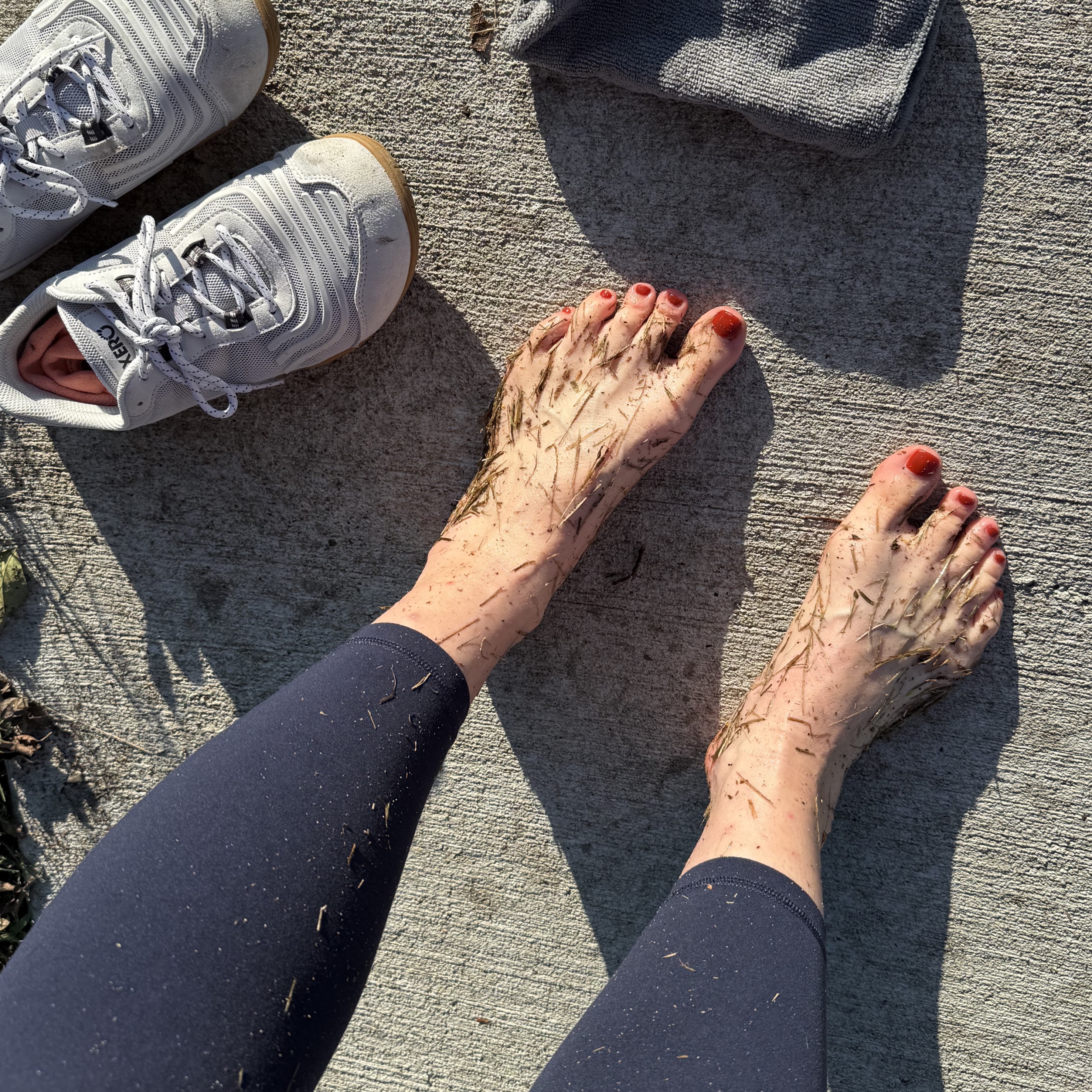
I am careful not to optimize this time for exercise, which for me, kind of ruins the whole experience. I lift weights a couple times a week, so that box is checked. For me, walking is not a means to an end, it is the end! Instead, I consider my walks soul-care. I figure the nervous system regulation alone supports my desire to go slow.
I listen to the birds, notice the trees, and pet the dogs passing by. No airpods, weighted vest, or step tracking for me. My goal is just to be present, doing what I’m doing or often I will pray. I’m working to develop the ability to listen to God, and this, I find, is the best time to practice.
Midday Outdoor Break
As a busy CEO, it’s easy to fill my day with back-to-back meetings with hardly enough time to take a bio break or eat lunch. In the last year, I’ve made it a point to leave enough margin to try to step out of my office at least once a day, even if it’s only for 5 minutes, to walk to the end of the block and back. (There are plenty of days I completely forget about this or over-schedule myself, so I try not to hold myself to an impossible standard of perfection. That would miss the point entirely.)
If I’m feeling a little more ambitious, I will take a call while walking, and always think, “This is amazing! Why don’t I do this all the time?” It’s easy to forget that we used to communicate with each other just fine before Zoom on our phones.
Evening Gardening or Stroll
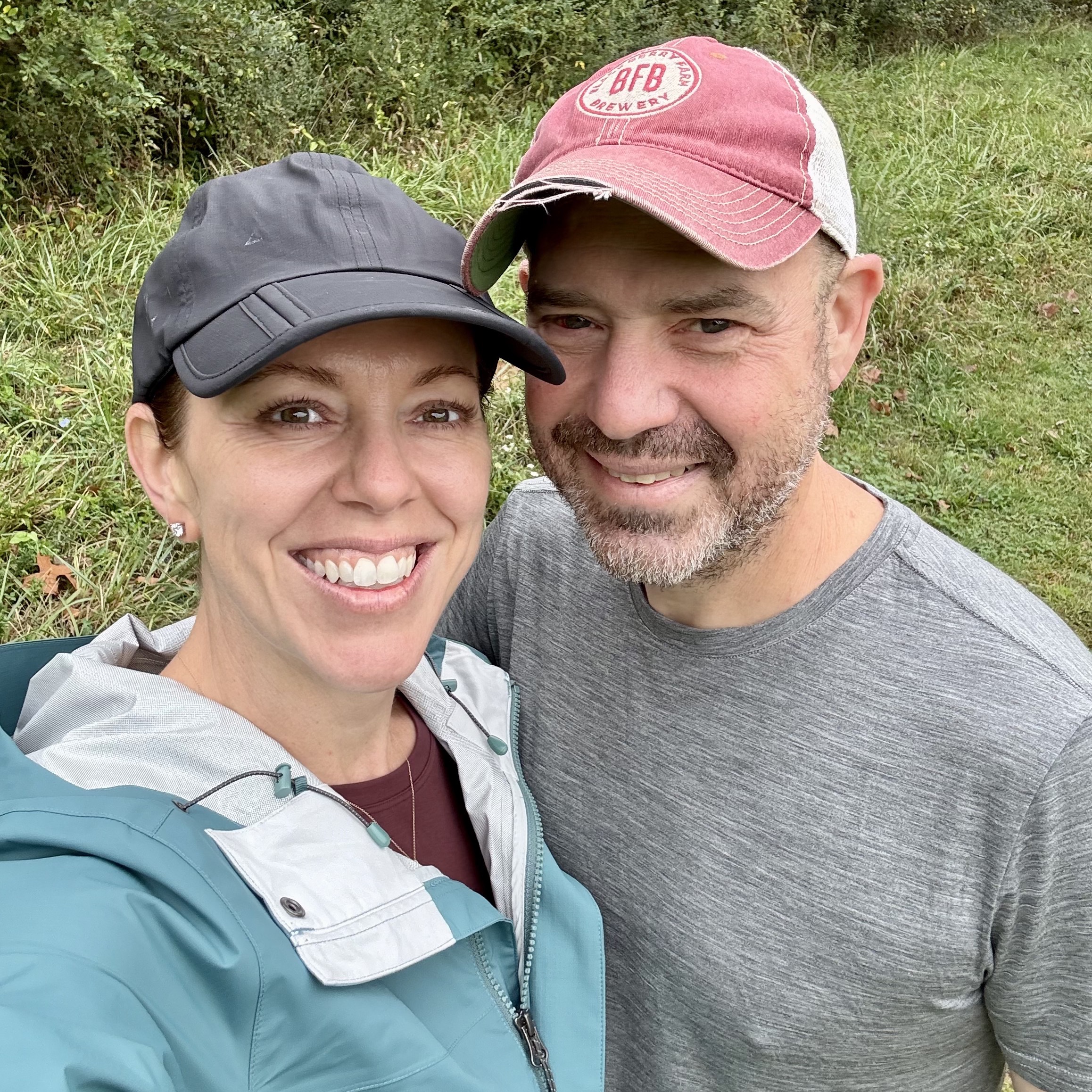
When the days are long enough, I also try to get outdoors, even for just a few minutes, in the evening. Sometimes that looks like watering my garden after dinner for 15–20 minutes when I have seeds spouting or do some other task out there. Sometimes it looks like taking a short stroll around the neighborhood with my husband while Naomi rides her scooter. Nothing remotely strenuous, just getting off our screens, walking under the towering trees in our neighborhood, enjoying the fresh air and beautiful sunset.
Okay, so what about you?
Curing Our Nature Deficit Disorder
Depending on what your life looks like now, my nature-loving habits may seem like a lot or a little compared to yours.
If you’re spending the majority of your day indoors, and you’re looking for an easy way to start getting outside, I suggest this: commit to spending the first 15 minutes of your day outdoors; when you wake up, head outside.
Be sure to make this something you look forward to rather than dread. This should not feel like trying to psych yourself up to cold plunge. I found that attaching it to other parts of my regular ritual I enjoy, like coffee, helped get me over the hump of changing my routine, as does a warm robe or jacket when it’s chilly. “Cozy” is my operative word in this season, and I apply it here liberally.
Once you’ve mastered that, consider choosing a meeting every day to take on the phone on a walk outside rather than Zoom or in a conference room. Suggest your meeting-mate join you, either virtually or in person. Your conversation will likely be more productive, creative and enjoyable. I often choose my weekly 1:1 with my assistant for this.
Whatever way you can get outside, just do it. And, once you’ve done it, look for more opportunities to get out even more. And when you do, prepare to think and feel better with every passing hour spent outdoors.
Question: Are you suffering from Nature Deficit Disorder? What’s one simple way you could spend more time in nature this week?
If you enjoyed this post, hit the ❤️ button and share it with someone you think will enjoy it too.
Disclosure of Material Connection: Some of the links in the post above are "affiliate links." This means if you click on the link and purchase the item, we will receive an affiliate commission. Regardless, we only recommend products or services we use and believe will add value to our readers. We are disclosing this in accordance with the Federal Trade Commission's 16 CFR, Part 255: "Guides Concerning the Use of Endorsements and Testimonials in Advertising.
