





Ugh. Problems. Besides death and taxes, one thing we can count on being part of our life whether we like them or not is problems.
I was recently talking to my therapist about a problem I was dealing with—a frustrating problem in our business. (Yep, we have problems too!) I told her I just wanted to engineer the stress out of the business.
She paused and asked, “Do you think that is a realistic expectation?”
How the World Works
I sighed. Of course not, any more than saying I wanted to have a stress-free experience raising five kids. It got me thinking. Maybe I had unconsciously adopted a definition of success that was not only unrealistic but also a setup for more stress and disappointment:
Success = The Eradication of All Problems and Stress
Certainly, we want to remove what problems and stressors we can. I don’t want to repeat mistakes or make decisions that get me into hot water unnecessarily. And I want to be a good student of life so I don’t have to “go to school” for anything I could have easily avoided.
But like you Ive been around long enough to know, if I’m honest, that every person I’ve ever met has experienced problems of one kind or another. Same with every season I’ve ever been through. It doesn’t matter how mature, healthy, or resourced you are, problems come to us all.
As a person of faith, I believe this is not only part of how the world works, but it also holds the keys to some of our greatest growth opportunities, and ultimately, blessings themselves.
Gifts in Ugly Wrapping Paper
In that same conversation with my therapist I told her that when I thought about all the problems I’ve ever faced and all the hard things I’ve ever been through there wasn’t one that turned out as bad as I feared. That includes every parenting, health, financial, and relational crisis!
In fact, not only did the worst-case scenario never play out as I feared, but each “problem” usually turned out to be a gift in ugly wrapping paper, one I’d never return (though admittedly an experience I’d never want to repeat either).
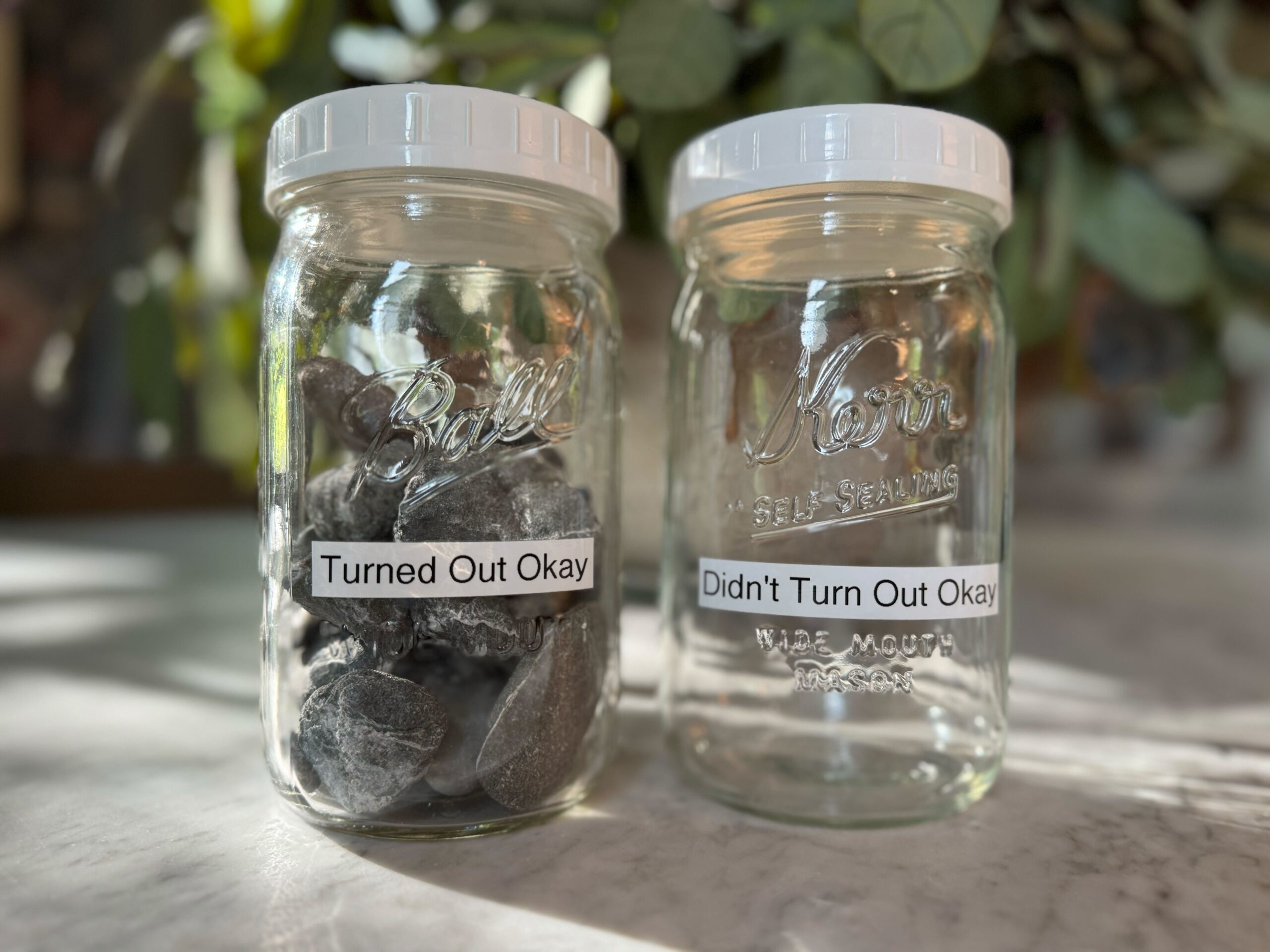
I told my therapist that I wanted to start a “rock jar” where I added a rock to one jar for every major problem I faced. Then, once that problem is resolved, I have a “turned out okay” jar and a “didn’t turn out okay” jar. Depending on the outcome, I would choose the jar that best fit.
You can see where I’m going: My hunch is that the “didn’t turn out okay” jar remains empty, while the “turned out okay” jar ends up full.
A New Definition of Success
So, if problems are somewhat unavoidable—especially if you are a parent, a leader, a business owner, or a generally ambitious person pursuing big goals—how should we think about them, if not as a threat to our mental health and well-being?
Well, I think we redefine success along these lines:
Success = Navigating Problems with Self-Awareness and Self-Regulation to the Best Possible Outcome
In other words, if you regularly encounter problems in your life, it doesn’t mean you’re doing anything wrong. Dealing with them is a normal part of life and a skill we can improve with intention and practice.
When I think about problems this way, a few things happen to me:
1. I don’t live in fear of them. Just the mere acceptance that problems are a normal, inescapable part of life and business calms my nervous system. How about you?
It’s funny. When we don’t make “problems” problematic, they don’t cause as much anxiety. It’s kind of like having a random medical symptom, thinking for sure it means you are dying, only to realize it’s no big deal. The realization causes the anxiety to dissipate, even if the problem doesn’t go away.
2. I don’t beat myself up for encountering them. When I change my definition of success to be about successfully navigating problems rather than eliminating them, I don’t feel bad about myself or my leadership when I find myself facing yet again another problem to solve. This definition allows me to focus on building my problem-solving toolkit, which we’ll talk more about next week.
I become intentional about my analysis of problems and understanding the root of them. I get better at thoughtful decision-making by getting the right outside (or inside) input when needed, and I make a thoughtful plan of action instead of reacting to the surge of emotions I initially feel.
3. I trust myself to navigate them more successfully. When I notice all the rocks in my “it turned out okay” jar, and how few there are (if any) in the “it didn’t turn out okay” one, I experience a surge in confidence in my ability to traverse the stormy waters of problems.
After all, my track record—and yours—is 100 percent! We’ve come out on the other side of every problem we’ve faced, right? And, if we’re intentional, we’ve learned invaluable lessons that make us better and better at facing them. Experience suggests we have no reason to fear that we won’t be successful in finding a way through the next obstacle we face because we always do!
4. I experience less stress because of this perspective. Ironically, accepting that problems are likely to be our constant companions in life and business—instead of trying our hardest to avoid them or begrudging them when they come up—actually lowers our stress. It’s counterintuitive, but resisting problems makes them worse and a lot more stressful.
In Every Season and Situation
I am often asked by young parents if I have any advice on how to consistently incorporate a thorough morning routine into their schedule. As a mother of five kids, I know that idealism is incredibly discouraging when you have to face how impossible it is day after day.
Instead, I always recommend people lower the bar, welcome the season they’re in, and scale their expectations accordingly. It’s true for more than parenting. It’s true for every season and situation.
Of course, that doesn’t resolve the problems we face. I’m excited to share some thoughts on problem-solving with you next week. But for now, just notice how you react when problems arise. What’s your perspective on challenges that come your way? Are you responsive or reactionary? It has everything to do with how successfully we navigate them.
Your turn: How do you deal with stressful situations when they arise?
AI Disclosure: This newsletter was written by a human—me—for a human—you! I sometimes use AI for research, to critique my writing, or to proofread before I publish. But the words I choose, the sentences I write, and the ideas I share come from my brain and out through my fingertips onto the keyboard before they find their way to your inbox. If that ever changes, I’ll tell you. Thanks for reading, and thanks for being a human.
Last modified on September 29th, 2026 at 12:07 pm
Disclosure of Material Connection: Some of the links in the post above are "affiliate links." This means if you click on the link and purchase the item, we will receive an affiliate commission. Regardless, we only recommend products or services we use and believe will add value to our readers. We are disclosing this in accordance with the Federal Trade Commission's 16 CFR, Part 255: "Guides Concerning the Use of Endorsements and Testimonials in Advertising.