

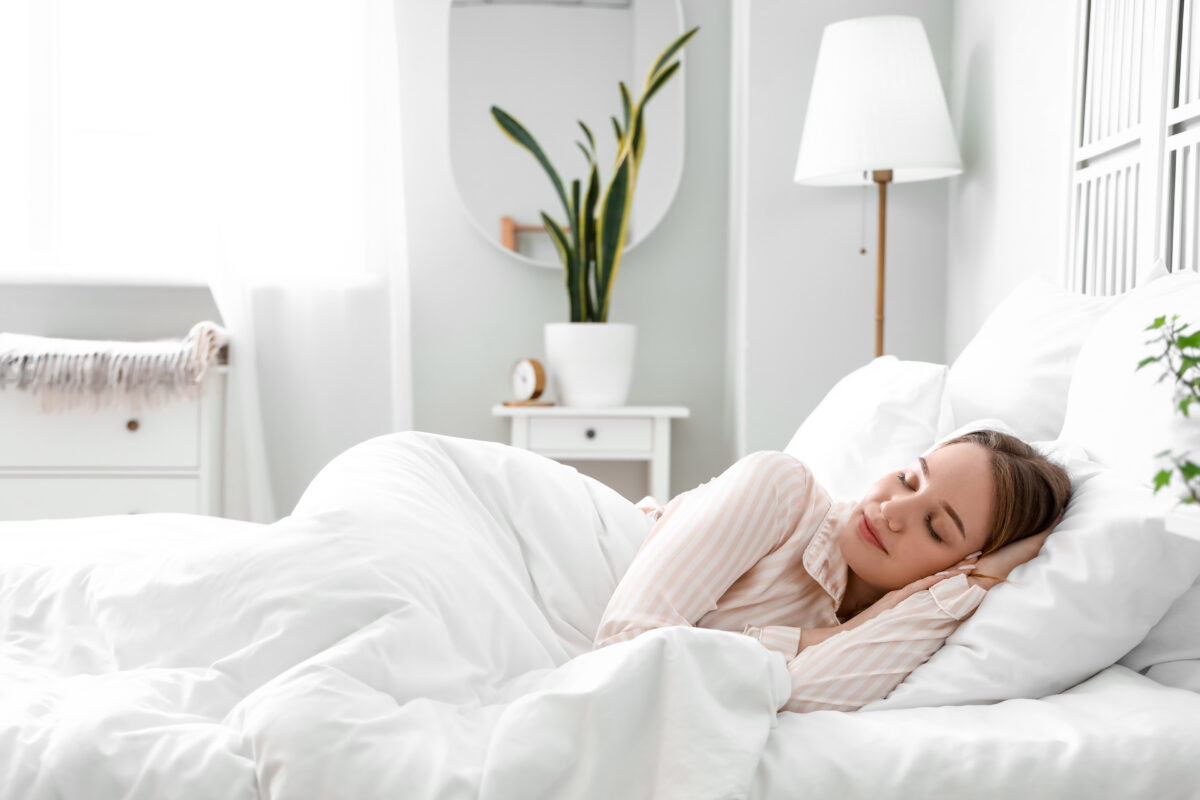
I don’t know about you, but when I don’t get enough sleep, everyone around me gets more irritating—and so do I! I truly believe consistent, high-quality, high-quantity sleep is the foundation of productivity, achievement, emotional steadiness, health, nervous system regulation, creativity, connection, and so much more.
But it isn’t easy, is it? In a few weeks, we’ll set the clocks back an hour. Most of us will treat that extra hour like a gift—and then spend the next week feeling a little off. It’s a good reminder of how much rides on great sleep (as if the midday groggies of daily life didn’t remind us enough).
In this issue of the newsletter, I’ll share what gets in the way of sleep for me, along with the habits and tools for getting the sleep I need to show up at my best.
When I don’t get enough good sleep, a few things happen
I get easily overwhelmed
Everything seems harder when I’m tired. Does that happen for you? What would normally be no big deal suddenly feels incredibly overwhelming. My frustration tolerance—that is, my ability to muscle through the difficulty required to make progress on important projects or tasks—dwindles on the days I get insufficient sleep. Consequently, I accomplish far less and far fewer important things on days when I’m tired.
I can’t focus
When I’m tired, I feel like I suddenly have severe ADHD. I notice this sets in even if I’ve only missed an hour or two of sleep. I compulsively jump from task to task, starting many but completing almost none. This is especially true if the task requires what Cal Newport calls “deep work,” where I need to be able to think deeply and create optimally for at least 90 minutes at a time.
The best I can hope for is a 15-minute burst of focus if I’m weary. It’s hard to accomplish much that way. Instead, I have an overwhelming need to check social media, rearrange the plants in my office, open the mail, or do just about anything but my Daily Big 3. That’s because exhaustion diminishes impulse control.
My decision-making is harder and poorer
Decision making takes a lot of brainpower. You’ve got to be able to clearly express the desired outcome you’re after, then determine how best to get there. That involves getting the opinions of others, analyzing data, and weighing pros and cons before synthesizing all of it to make a good call.
Given that overwhelm and a lack of focus are hallmarks of the weary (at least this weary person), decision making often suffers without enough sleep.
I’m not very kind
I teased this at the start, and I hate to admit this one, because it impacts the people I love the most. But when I’m tired, it’s incredibly hard to choose kindness instead of irritation. This goes back to the issue of impulse control I mentioned above. With adequate rest, I have the mental and emotional energy to choose actions that align with my values. Often, those actions require restraint of some kind in the present moment.
When I’m tired, I don’t have as much of the frustration tolerance I need to experience the impulse but choose not to act on it. As a result, I find myself apologizing to my kids and husband far more often when I’m exhausted.
Clearly, a lack of sleep carries a huge price tag, at least for me, and it’s not one I’m willing to pay very often. In fact, I prioritize sleep above exercise, nutrition—really, almost anything—since I know how critical it is.
This is probably a good place to pause and say that while good sleep is mission-critical for a good life, none of us do it perfectly. Whether your hormones are crazy like mine these days, or you have a new baby, or you’re in a different time zone, or you’re in a period of intense stress, your sleep will get disrupted from time to time.
I remember when our youngest daughter, Naomi, was newly home from the NICU and wasn’t yet sleeping through the night. I worried I was doomed to be a zombie for eternity.
Thankfully, no season lasts forever, so whatever season you’re in, be gentle with yourself and lower the bar if you’re in a moment at odds with your sleep goals. The last thing you need is your own judgment if you’re already struggling. My advice is to do what you can to make what you can get as good as possible, then get back on track as soon as you can.
Here are a few habits that help me consistently get enough rest
Consistent bedtime and evening ritual
It can be so tempting to just watch one more episode of my favorite show. Especially, if like me, once the kids are in bed, you finally have time to yourself—maybe for the first time all day. This is where committing to a consistent bedtime and establishing a simple evening ritual can help.
In my experience, if I have to make the decision every night when I want to go to bed, I put it off, and find myself staying up way too late. A great day starts with a reasonable bedtime the night before. For me, that’s 9:30.
Prior to that, I watch a show, take a bath, take my supplements, and hit the sack.
A chilly room
Research shows we sleep best in a cold room. Everyone is different, but 65–68 degrees works for me. (I also like sleeping under a heavy blanket, so the temp needs to be low or I’ll overheat, especially since night sweats are now a part of my reality. What fun!)
Minimal light
I’ve said to Joel many times, “Why do they have to put lights on everything we have in our bedroom?” Whether it’s your noisemaker, alarm clock, chargers, or smoke detector, there is probably more light than you realize in your bedroom at night. All this can serve to keep your body in “daytime mode.” Make sure to cover or unplug these things so you can sleep in peace.
Stress awareness
I find it hardest to go to sleep on days I’ve experienced a lot of stress. These days, the source of that stress is one of two things, sometimes both at once: an open project in the business or parenting, since we have a lot of ages and stages happening simultaneously (our kids are 26, 23, 18, 16, and 7).
You can try something like an Oura Ring for monitoring daytime stress, but right now I’m just trying to be mindful of how I feel in my body. (I found the Oura ring gave me one more thing to stress about.) If my stress level is high, I know I need to be intentional about doing some mindfulness or other stress-management techniques to set my body (and mind) up for rest.
Embodied stress management
Beyond daily stress management, I’ve found that body-based therapeutic modalities help to keep my stress levels in a reasonable range. Restorative yoga is great for this—same with regular somatic experiencing therapy. Working out and walking also do wonders.
Some of my favorite recommendations
Okay, now for the fun part. I love a good product recommendation and, man, do I have some for you! You don’t need all of them, but I’d bet money you’ll find one or two things that could help you improve your sleep quality.
Bath with epsom salt and essential oils
Epsom salts are full of magnesium, which is calming to the body. I use about four cups of this salt from Amazon (I put it on Subscribe & Save). Then, I add several drops of each of the following essential oils: doTERRA Balance, doTERRA Shinrin-Yoku, doTERRA Lavender, all of which promote calm.
EPABO contour pillow
I struggle with neck pain and have tried so many pillows. This one is my favorite. It takes a minute to get used to a memory foam pillow, but now I can’t go back! When I travel, I take my Cushion Lab travel pillow with me, since you never know what kind of pillow you’ll get at a hotel.
Silk eyemask
If you want to go to bed before dark or get up later, wearing a comfortable sleep mask can be a game-changer. I regularly wear mine, especially if I travel and am not sure I will have blackout blinds.
Dohm noisemaker
You may have seen one of these outside your therapist or doctor’s office. I’m very sensitive to noise at night, so I bring one with me when I travel and I have several in my bedroom at home. The sound doesn’t sound “tinny” and has a pleasant whir that I look forward to hearing each night. (I also use a fan—a midsize box fan, which I stash in a corner in the room.)
Light blocking stickers
If you want to cover up all those little green lights manufacturers put on everything we keep in our bedrooms, these stickers make it super-easy.
Prioritizing sleep is essential for overall well-being and effectiveness. In fact, it might be the ultimate life hack. By implementing consistent bedtime rituals, managing stress, and using helpful tools, you can significantly improve your sleep quality—and that will improve the quality of everything else in your life.
Now it's your turn: What do you do to get a good night’s sleep?
AI Disclosure: This newsletter was written by a human (me) for a human (you!) I sometimes use AI for research, to critique my writing, create graphic representations of concepts, or to proofread before I publish. But the words I choose, the sentences I write, and the ideas I share come from my brain and out through my fingertips onto the keyboard before they find their way to your inbox. If that ever changes, I’ll tell you. Thanks for reading, and thanks for being a human.
Last modified on November 23rd, 2026 at 3:30 pm
Disclosure of Material Connection: Some of the links in the post above are "affiliate links." This means if you click on the link and purchase the item, we will receive an affiliate commission. Regardless, we only recommend products or services we use and believe will add value to our readers. We are disclosing this in accordance with the Federal Trade Commission's 16 CFR, Part 255: "Guides Concerning the Use of Endorsements and Testimonials in Advertising.