
Why the Antidote to an AI Storm Might Be a Hive Full of Bees
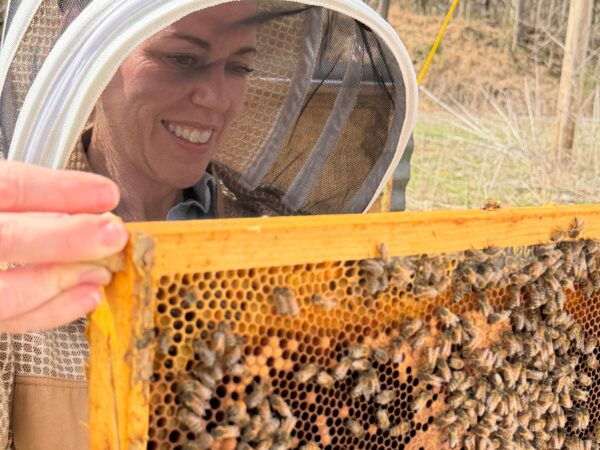
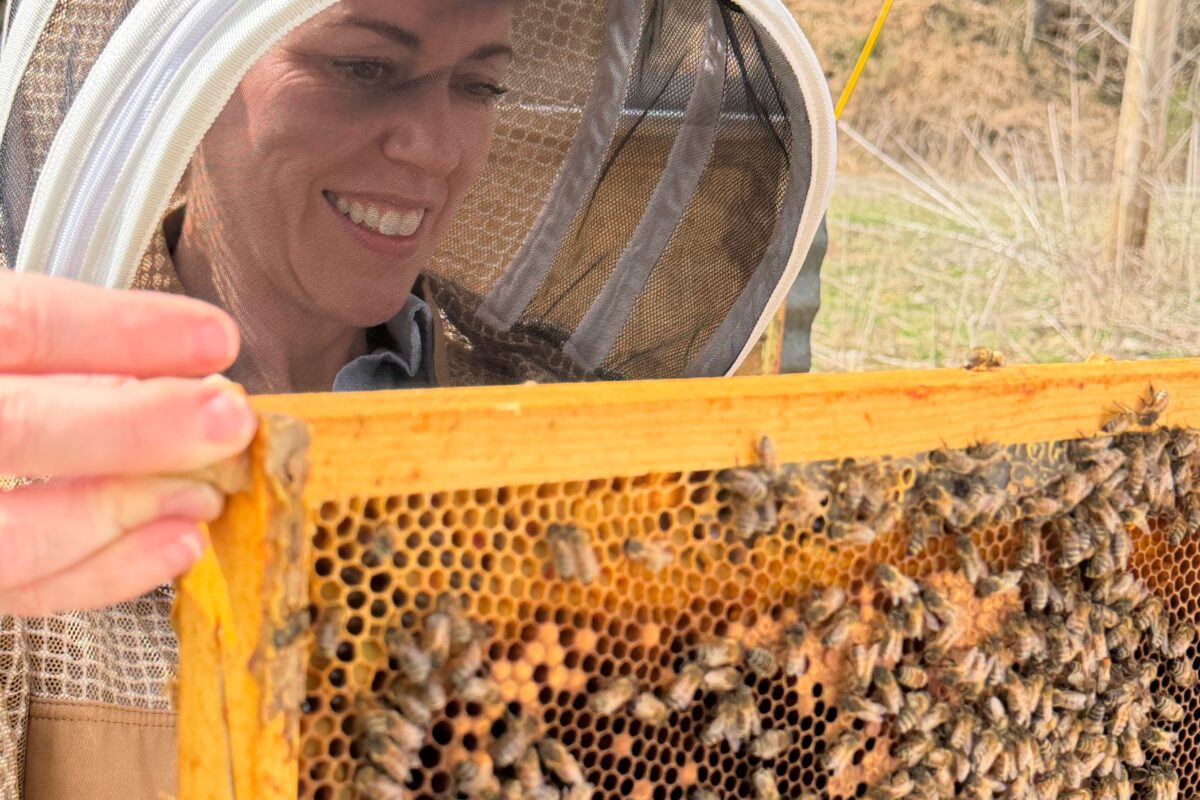
And there I was on a random Saturday morning, holding a frame full of hundreds of live bees with my bare hands, standing in the front yard, in middle-of-nowhere, Tennessee, being guided by a man wearing no protective gear whatsoever, just a pair of old jeans a shirt that said, “Don’t Tread on Bees.”
How did a suburban mom of five and CEO end up in such a place you ask? All I can say is that the bees called me there.
It Started in the Garden
I think it all started in the garden last spring. As any gardener will tell you, you soon learn the only thing to fear with regard to bees is not having them. If you don’t have enough, you end up like me, artificially inseminating your zucchini plants with Q-tips covered in pollen from the male flowers of the squash plant.
Nobody wants that. It’s just weird. I am a poor man’s bee at best, and I’d rather bring in the experts. I started to think, how can I get more bees out here to do what God made them to do in the first place?
I started adding to my pollinator garden (native flowers rich in pollen and nectar that naturally attract bees, butterflies, and other pollinators). I started watching, captivated with amazement, as tiny, fuzzy bumble bees, and big fat bulldozer-looking bumble bees hovered over my bee balm, my lavender, and my coneflowers. I was mesmerized, and then I fell in love. I honestly don’t know that I can explain it.
Did I get stung? Was I ever scared? No, I was just utterly transfixed by their beauty, by their function, by the power of what they make possible with their tiny bodies.
I decided then and there that I wanted to become a beekeeper, but in truth, not primarily because I was trying to bolster the pollination project in my garden, although that is certainly a benefit.
I decided I wanted to keep bees because I need more anchors in my life.
Welcome to Bee Camp
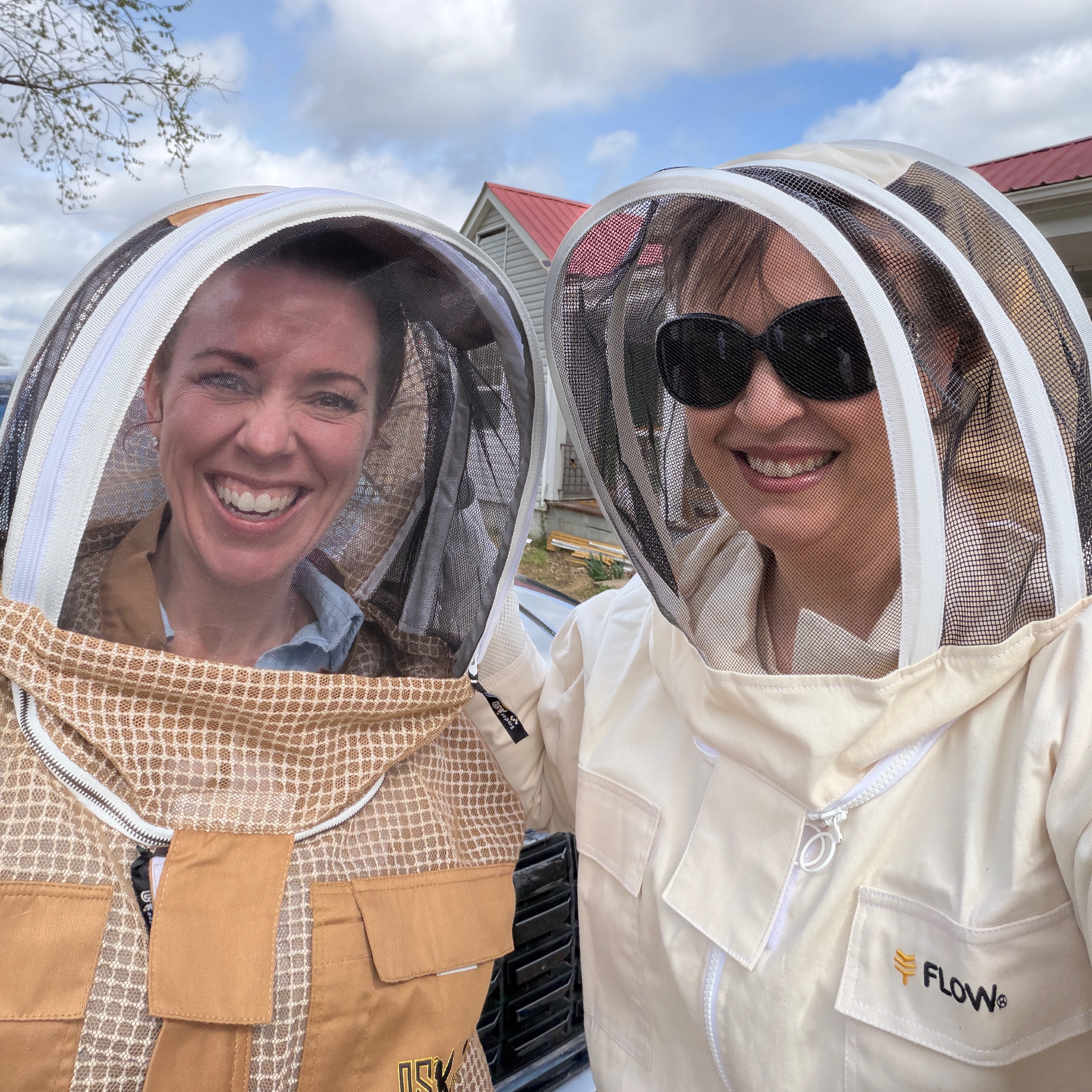
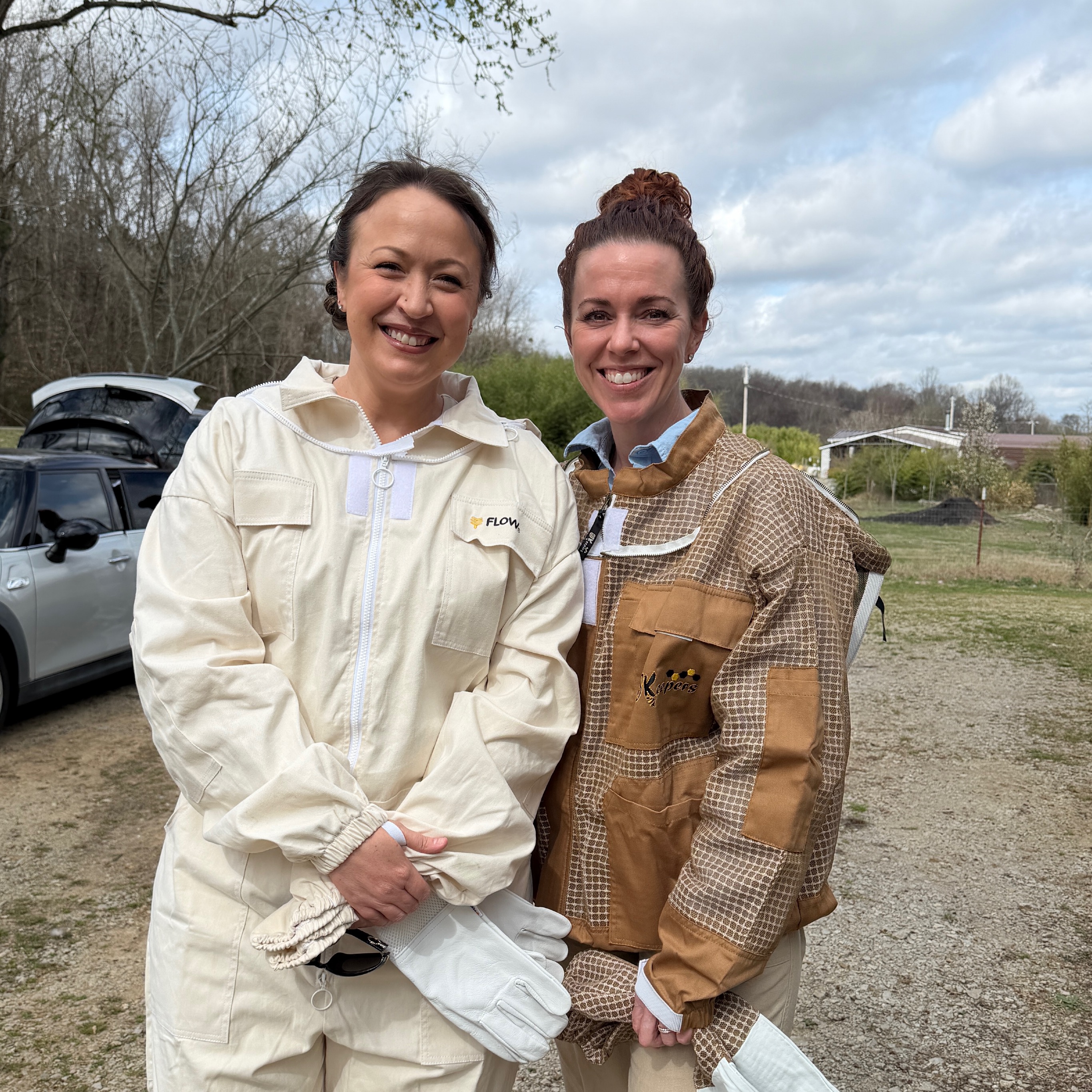
For Christmas, my kids gave me a day at “bee camp” with my friend and our garden consultant, Natalie Fockel. They also gave me a special suit to wear to protect myself and some tools I’d need to get started. So, a couple Saturdays ago, off I went to the middle-of-nowhere for bee camp.
Now, I want to be honest with you. I was nervous in going. And not because I was afraid of getting stung (okay, a little nervous about that, I’m really not afraid of bees), but because it was entirely new. I was afraid of doing it wrong, of looking silly, of messing up.
Afterward, I was thinking about how, as adults, especially in midlife, we often stop learning. We tend to go deeper instead of wider. We want to gain ever-growing mastery of the things we already know, not acquire brand new skills where we’re starting from zero. It’s super-uncomfortable, at least for me, to “not know.” Gosh, if I worship at the altar of any false gods in my life it’s “knowing.” So, yes, I was way outside of my comfort zone.
But there I was. Beginner with tags-still-on bee suit in hand, joining my fellow circle of baby beekeepers all in search of something we couldn’t quite name, but felt drawn to nevertheless.
Because a storm was forecasted for the afternoon, we did our camp in reverse. Bees first. Lectures second. So, with virtually no preparation, we, as they say, “got into the bees.”
Our teacher, Adam Martin, is a beekeeping purist. I had no idea what I was getting into. He was hardcore. As in, this man not only uses an obscure hive type that you can’t even buy and have to make yourself, he traps his own wild bees.
I was starting to feel like I had been dropped in a chapter of Little House on the Prairie, and in many ways, that’s exactly what had happened. Adam is basically a modern-day Pa Ingalls.
A homesteader by trade and personality, Adam hails from Bakersfield, California, and came to Tennessee for many of the things droves (or dare I say “swarms!”) of Californians are searching for these days: freedom, independence, permission to let their freak flag fly, as the saying goes. Well, Adam is flying high to be sure.
The Tai Chi of Beekeeping
While I am not a homesteader by nature or temperament, what I couldn’t help but notice as we “got into the bees” was how calming it was to handle them. If you had watched us, our little class at work without context you probably would have thought two things.
First, why are these people out in the country dressed up like white-robed Martians; and secondly, why are they doing tai chi in their Martian suits in some guy’s front yard? I say tai chi because the way Adam handled his bees was more like tai chi or ballet than livestock handling. He was so respectful, so careful, so slow.
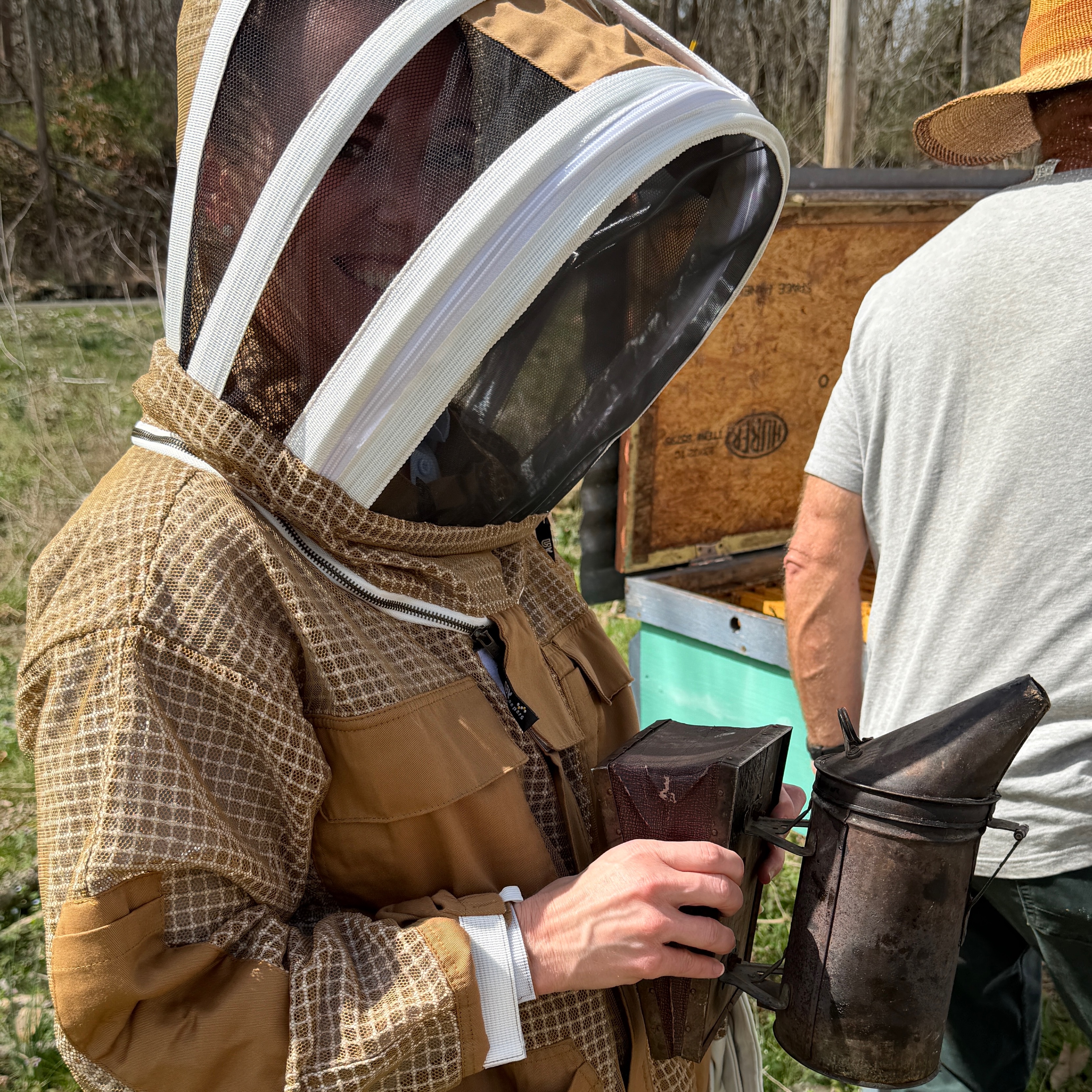
Part of this is self-preservation. Bees tend to stay calm when you move slowly and don’t squish their sisters. If you accidentally kill a bee, she sets off pheromones that alert the guard bees to protect. So, in general, as long as you don’t do violence to the bees, they won’t do violence to you. They also don’t like fast or aggressive movements. That signals an invader and, again, they activate for protection.
To interact this way, you must be totally focused. Totally “one” with the bees. Tuning your full attention—body and mind—to what is happening in and around the hive. Every movement, every finger placement, every step is done with intention and care. And, all the while, you are observing the bees. What are they doing in the hive? Is the queen active? How do you know? Do they have the resources they need?
So, what I quickly learned is that beekeeping requires full immersion. And that is the gift of it. When you’re working with bees, you cannot do or think about anything else. It’s fully embodied. Your brain and body are in sync as if you were dancing. No mind in one place and body in another. You are re-membered in the truest sense.
And that’s why I believe beekeeping, like gardening, is anchoring.
And That’s the Gift of It
These kinds of fully immersive experiences, many of which happen outside, not coincidentally according to the research, anchor our nervous systems to something that steadies us during a storm.
And in case you haven’t noticed (I say very tongue in cheek!), we are in a storm. I’m not talking about all that is going on in your personal life or mine, and I bet that’s a lot too.
I’m talking about what’s happening in the world. As you know, I’ve been talking a lot about this lately because I feel like something has shifted in the last sixty to ninety days that I haven’t seen since COVID.
The acceleration of AI has hit a tipping point. If you’re following or trying to understand it and participate, it’s literally disorienting in ways both exciting and terrifying, both practical and existential.
I am optimistic about many parts of what AI brings to the table, and I’m also very clear that at minimum, the disruption we are at the beginning of will be jarring to say the very, very least. We will be unsettled. The foundations of much of what we know and understand about how the world works is changing before our eyes—both for good and maybe ill. But regardless, this is our reality.
And this is to say nothing of war with Iran, all the uncertainty that brings, and goodness knows everything else in the daily news cycle.
The point is this: When uncertainty massively accelerates and intensifies as it has and will continue to, we need an anchor to tether us so we don’t blow away in equal measure. Humans, neurologically speaking, don’t like uncertainty at the level we’re experiencing.
The Storm We’re In
As I’ve said before, the brain is a prediction machine, and when it encounters truly novel situations its prediction abilities are rendered impotent. “I can’t see past six months,” my friend Bryan told me yesterday. “I used to see years, but now I have no idea.” It’s just wild!
It’s incredibly exciting in so many ways, and it’s incredibly overwhelming—as in, exceeding our capacity to process what is happening in real time. And here’s the thing: We can’t control this. The pace. The acceleration. The massive adaptation that will be required from all of us. The seas are rough, and our boats are going to get tossed around.
But here’s what we can control: We can intentionally drop an anchor. And let me say this. If you want to get to the other side of this with your sanity, your identity as a human, your sense of purpose and calling, your sense of “self” intact, you are going to have to be very intentional about this.
If you’re not, the sea will swallow you. It’s too much.
We are going to need our wits and our sea legs like never before. We’re going to need to ground ourselves and build our resilience, and that’s where the news gets good. Because that we can do. We can anchor.
The anchor will help us to keep our balance and keep us from being toppled. An anchor keeps a boat from drifting, from blowing off course, it keeps the boat in the harbor without being swept out to sea when the storm surge happens, and tethers it to the dock for safety.
Drop Your Anchor
So, then, what we all need to be answering for ourselves as we head into this stormy season is, “What are my anchors?” What will keep my boat steady, while we go through this period of history marked by nearly unfathomable uncertainty?
The goal is not to avoid the stress or the anxiety altogether by avoiding the stressors. That is a fool’s errand. The goal is to have countermeasures—actually, counterweights—that keep us anchored to the good, the true, and the beautiful. To the certain, so the sea doesn’t overwhelm us.
For me, that revolves around spending time in nature, engaging in analog, sensory experiences, being in person with other people, and worshiping in an ancient way. Gardening, walking, beekeeping, baking, real fires, dinner with loved ones. But not exclusively, right? Because I am also spending a lot of time with AI. I am not putting my head in the sand. I am enthusiastically exploring with wisdom and discernment.
To change my metaphor for a moment, just as the space explorer doesn’t exit the airlock untethered to the mothership, neither should we. And the mothership is the human, analog, material world—which includes, among a billion other delights, bees.
Now I want to ask you: What are your anchors?
Last modified on March 23rd, 2026 at 11:21 pm
Disclosure of Material Connection: Some of the links in the post above are "affiliate links." This means if you click on the link and purchase the item, we will receive an affiliate commission. Regardless, we only recommend products or services we use and believe will add value to our readers. We are disclosing this in accordance with the Federal Trade Commission's 16 CFR, Part 255: "Guides Concerning the Use of Endorsements and Testimonials in Advertising.