
Overwhelm Isn’t About Productivity. It’s About the Environment You’re Trying to Be Productive In
Do you remember what life was like during the COVID epidemic? Who could forget? At the time I was leading Full Focus as a newly minted CEO. Our team was not doing well. We had mental and physical health issues popping up at an alarming rate, and the word “overwhelm” was always on the tip of our tongues. Everything just felt hard, even simple things like meetings and making decisions.
Because we didn’t have language for what was happening, we assumed we simply had a “capacity issue” driven by too few team members, so we hired more. Nothing changed. In fact, the “hard” got worse because the complexity of managing more people added to the mental and emotional load each person was carrying.
In retrospect, the capacity issue we were facing wasn’t about workload. The capacity that was being tapped wasn’t fundamentally about doing at all, but being. The burden of being a human during a pandemic put people way over capacity. Not in terms of hours—in terms of mental and emotional bandwidth.
You probably remember (or shudder to remember) the days of trying to figure out how to educate your kids on Zoom while also being on Zoom all day yourself. How to get groceries safely. How to not kill your spouse when you are stuck at home together 24/7. How to pivot your business. How to plan for the future with almost total uncertainty.
It. Was. Exhausting. Not just physically, but at a soul level. It felt like all of our assumptions and norms were down around our ankles and there was nothing we could do about it.
Fast forward to our present moment.
The Season and the Environment
As I talk to my coaching and mastermind clients, it’s easy to think that our broader sense of overwhelm—that feeling that there is just too much to do or process with the limited number of hours and mental bandwidth to do it—is just the result of an overflowing to-do list.
Most of us live in a season of life where there are more responsibilities than time. If you are anywhere near midlife, you feel this. The demands outside of work keep growing, while the stakes at work do too, all while your own body is discovering new and inconvenient limitations to its energy and capacity, no matter how well you take care of yourself.
And sometimes that explains the overwhelm: the season. Even if that’s not the full explanation, it’s usually part of the story. But seasons like this are also planted within an invisible context that adds to our mental load in truly novel ways.
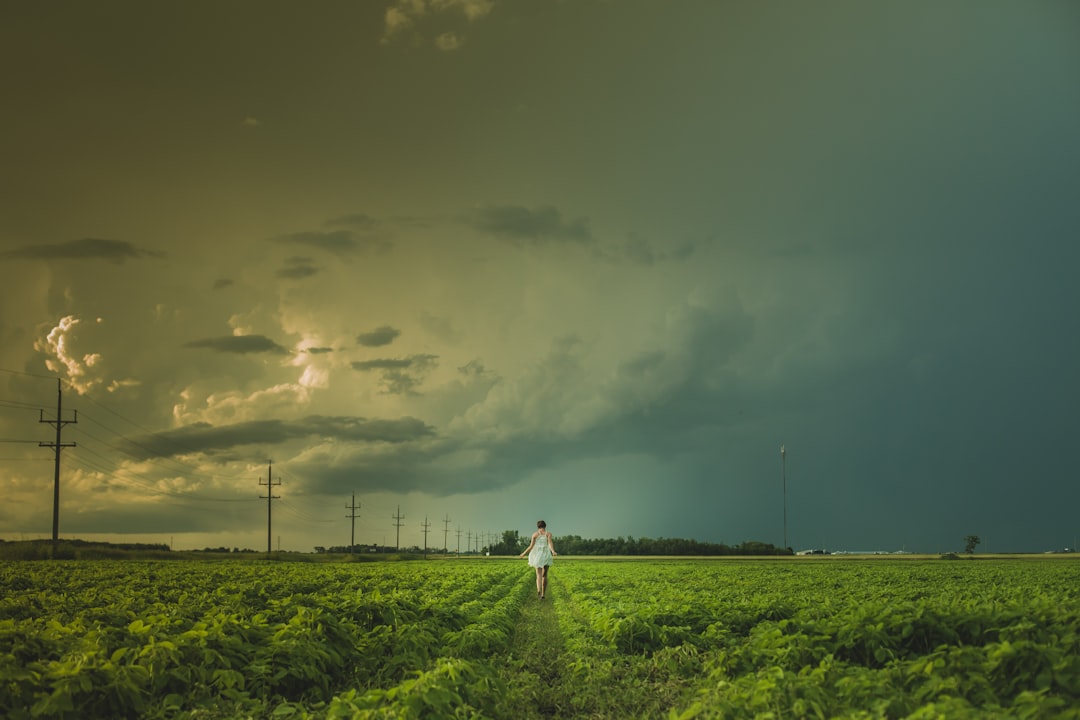
By context, I mean the environment of our season of life. Just like the weather, the environment of our life can make the responsibilities easier or harder to carry. Think about it like running errands on a sunny spring day with a high of 70 degrees and not a cloud in the sky compared with running those same errands in the middle of a torrential downpour with low visibility and lightning striking trees all around you. Same activities, different weather, very different perceived effort and stress.
As you probably know, the human brain is a meaning-making machine. It likes patterns, routines, and predictability best, as its goal is to forecast the future based on a dataset it understands well. The goal of its forecasting is to protect us from danger and ensure our survival.
But our current context is not well-suited to this. The context of 2026 defies pattern recognition and prediction based on historical reference. So our brains are working in overdrive trying to keep us moving while being constantly stymied by novel inputs that make no sense, and thus thwart their best attempts at predicting the future.
Really, ever since 2020 it’s been challenging. Most people do not have a prior global pandemic in their living memory, nor any reference points for understanding the impacts of prolonged lockdown and isolation both on us and our children and communities at large, nor the meltdown of our political structures, faith in institutions, or agreement on shared norms.
We cannot look back to discern how our parents handled a world transitioning to the digital age, let alone the AI one. We have no inherited playbook for navigating social media as the primary way people connect and struggle through disagreements—all governed by algorithms and economic incentives mostly invisible to us.
This is all new, at least in our lifetimes. So everything about this moment beguiles our brains and their threat-detection systems, leaving us convinced at the level of our nervous systems that we are under constant assault, whether or not that’s true.
Amping Our Nervous System
Just think about the big news stories in the last two months:
everything going on with ICE, including the killings of two American citizens;
the Epstein Files and most recently the arrest of Prince Andrew and the testimony of Hillary Clinton;
a possible military strike on Iran and Venezuela before that;
the eruption of cartel violence in a tourist area of Mexico;
the Supreme Court’s recent ruling on tariffs; and
the massive shifts in public health policies.
The list goes on, and your particular political position on any of these issues is immaterial for the point I’m making. Regardless of where you stand, it’s utterly head-spinning, and it’s all happening at a rate we’ve never seen before.
And depending on how you’re wired, each one of these events is a rabbit hole waiting to engulf you. A couple of weeks ago I found myself down the rabbit hole of the disappearance of Savannah Guthrie’s mother, Nancy Guthrie. It hit close to home for reasons I can’t quite articulate.
Before I knew it, I was checking the news for updates a couple of times an hour all day for several days on end. I was noticeably anxious. My chest was tight. I felt desperate for the authorities to find Nancy, almost like she was my own mother. Clearly, the boundary between “this was happening to them” and “this was happening to me” was not being held in place, like a cell wall that had been perforated.
One night, my son Jonah walked by me sitting at our kitchen island on my computer and said, “Mom, what are you doing?” I told him I was reading about the story of this woman who had been kidnapped. He replied, “Mom, don’t you always say that following the news is bad for your mental health?” Ugh. He was right.
Right then and there, I logged out of Facebook and decided I would give it up for the season of Lent at least. I had lost perspective, gotten sucked in, and the dopamine gods of Facebook were having their way with my brain.
Time to unplug myself from the power source and remember that the Guthrie story, as utterly heartbreaking as it is, lives 100 percent outside of my circle of influence or control. All I am doing by following it closely is driving myself crazy and allowing my mental and emotional resources to be taxed with absolutely no discernible ROI.
And Throw AI into the Mix
I use AI daily and experience tremendous benefits from it as a thinking partner in problem solving, financial modeling, and strategic ideation. Our team uses it to “vibe code” and create all kinds of amazing solutions to problems that once seemed impossible, difficult, or expensive to solve.
And even with all that “good,” the speed at which this is changing and becoming part of our lives is unlike any technological revolution we’ve ever seen.
We’re asking, What does it mean to be human? What parts of being human can be delegated to AI without consequence, and which ones would be our undoing? What if we get the answer to the question wrong, and will we be able to reverse course? What will happen to our current jobs and to work in general? Will the future be one of unimaginable scarcity or unprecedented abundance? What will my place be in all of it? Will we be in charge of the robots or will they end up in charge of us?
We have no way to predict the answers, and if we’re honest, very little influence over what happens and how. But here’s the emotional hook—even though we can’t control what happens, it will impact our lives in profound and intimate ways and we know it.
Not only is the scale of change we are in the middle of unlike anything we’ve ever seen, the speed at which it’s happening literally defies our brain’s ability to process, make sense of, categorize, and respond to intentionally. We are in constant overload and reaction mode.
As thoughtful people, even developing a philosophically grounded criteria for evaluating which AI and digital tools we should use and why and which ones we should avoid feels like an impossible task given both the speed and scope we’re talking about here. And yet we feel in our very real, human bones that the consequences of getting it wrong are real—for our souls, for our well-being, for our communities, and for humanity at large.
Anytime we experience something that intimately affects us but over which we have little to no control, mental and emotional strain and stress will result.
Not to Mention Political and Economic Instability
Lastly, here in the U.S., political norms and institutions seem to be falling apart, as is the economic order that we’ve taken for granted. Things that most of us have taken for granted for the entirety of our lives are suddenly on the table, and all at the same time.
International alliances, conduct assumptions for leaders, relationships between branches of government and their agencies, diplomatic norms, due process, accountability structures, and the list goes on—all up in the air.
My goal here is not to provide political commentary or argue my political position, heaven help me, but I think we can all agree that it feels like the political and economic ground under our feet won’t stop moving.
Every day can feel like playing Russian roulette.
We are hyper-aware, thanks to all forms of media, of countless existential and practical threats that impact our daily life with little ability to keep ourselves safe from their impact, while also juggling an overwhelming list of responsibilities in our real, daily lives for which we do have actual agency and control.
And think about the distraction this state generates. Awareness of all these threats and concerns keeps us hypervigilant, scanning for danger, consumed with things we can’t control. How are we supposed to stay focused on our work? Even if we didn’t have too much to manage, it’s a setup for failure.
In short, we find ourselves living in a predictably demanding season of life, but set in a mental and emotional environment that tsunamis our nervous systems on a daily basis.
And this is why we feel overwhelmed in a way we never have before.
So What Do We Do?
I’ve just shared a whole bunch of bad news with you about why you’re probably experiencing an unusually high level of stress right now. Maybe it comes in waves, or maybe it’s the ambient background music of your life right now.
Either way, what I can say with almost near-certainty is that I don’t think the factors I’ve described will die down or be resolved positively anytime soon. I don’t say that to be negative, but I do say it to disabuse us of the notion that this environment is temporary. These things get worked out over decades and even generations, not months or years.
So, if that’s the case, we have two choices:
Accept the environment, and make peace with a nervous system stuck on high alert at all times with no relief in sight.
Accept the environment, but choose to intentionally cultivate behaviors and practices that reduce the negative impacts of ambient stress.
If you’re like me, Choice No. 2 is the only viable one to consider, right? After all, the alternative is mentally, emotionally, and physically unsustainable.
And let me be clear: The goal is not to control things we can’t. In other words, we won’t be successful at trying to “reduce the stress” itself, so to speak. So engaging in political debates, railing on social media, trying to predict the future, and insulate yourself from the countless threats that exist are fool’s errands. Our brains aren’t good at this work, and we’ll likely fail or choose poorly.
Instead, I want to propose one primary antidote that I think gives us a fighting chance to navigate the months and years ahead with some measure of peace and sanity.
Engage with Real Things that Don’t Change
It’s easy to focus on the things that are changing at warp speed, and the list is long. But what remains? What’s steady? What can you engage in that’s still good, true, and beautiful?
Our nervous systems recognize these things and they telegraph safety to our minds, bodies, and hearts. They ground us in what is not moving, what is stable, what can be trusted. All of which we need right now more than ever.
When we regularly engage in these activities, they actually lighten our mental and emotional load because they counterbalance the uncertainty with certainty. Our humanity recognizes them and codes them as safe.
A few ideas:
1. Engage in a Historically Grounded Faith Community
This won’t be for everyone, but if you’re so inclined, or if you think you could be inclined, get yourself to a liturgical or other ancient form of worship and participate with your whole body and all your senses. I’m talking Catholic, Eastern Orthodox, Anglican, and so on. If said community happens to be in an old building that has been a pillar of the community for generations, all the better. Of course there are other ancient, non-Christian faith traditions that also meet this criteria.
Others have explained it better than me, but saying ancient and familiar prayers with fellow travelers that change with the liturgical seasons but very little with the times is profoundly settling to the spirit, whether you have the strength to believe them in the moment or not. Sing the old hymns, make the physical gestures in unison with those in your pew, take communion from the common cup if you can. But just do it.
This is one place where the bells and whistles of modern evangelicalism aren’t helpful, even if that’s your bread and butter as a person of faith. While they may have their place, any service resembling a world-class concert or motivational conference is not what a nervous system overwhelmed with novelty needs. So if you’re solving for settling your spirit, the old ways will be the most helpful ones here.
2. Use Analog Tools
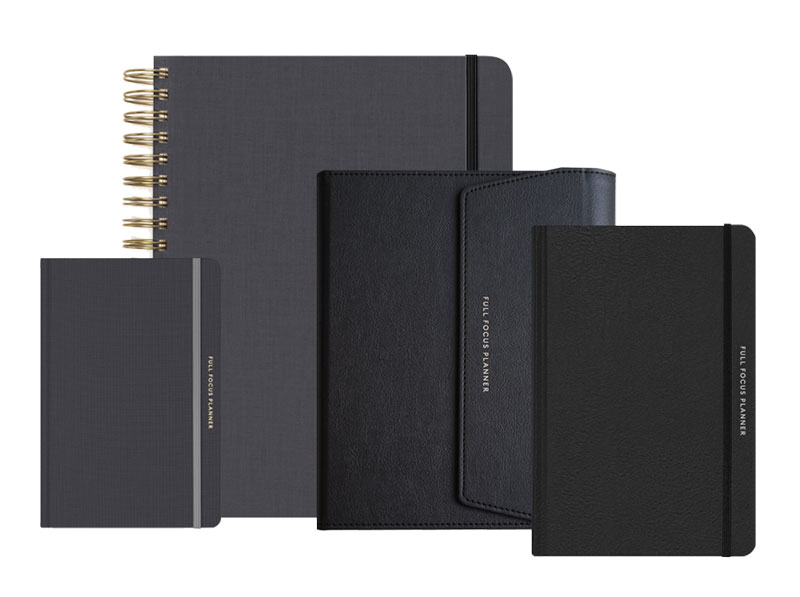
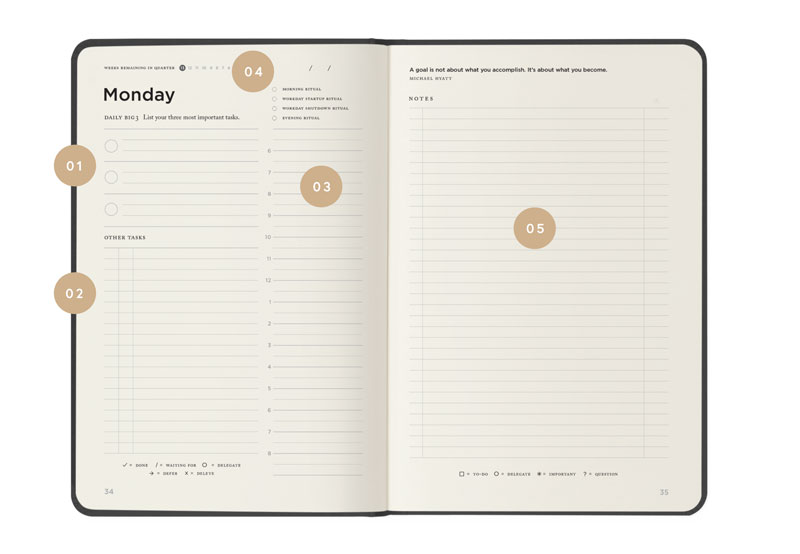
This is a predictable recommendation from someone who owns a company that sells physical planners, but digital tools add complexity and stimulation to our lives, and we need less of both. Just think about the countless decisions you must make when using digital tools—notifications on or off, which ones, which colors do you want to see your app in, etc. It’s a lot, especially once you add all those decision together.
Of course, they have their place. I am typing on a MacBook Pro right now, not writing on a legal pad.
But anywhere you can intentionally choose analog, you’ll find your stress level go down. For example, can you use a Post-It note instead of an Apple Note? Can you use an actual cookbook instead of a recipe online? Can you switch to an analog watch? Use a planner instead of a productivity app? Handwritten notes instead of AI ones? Maybe not all the time, but sometimes?
3. Spend Time with People in Person
Whenever possible, get face to face with people. Humans co-regulate each other. We are wired for it—mirror neurons and all that. Zoom and FaceTime, as good as they are, in my opinion, for the birds. Even worse is social media. We’ve got to have coffee, go on walks, have dinner, drink a glass of wine together. We are social beings made for relationships. Isolation creates nothing but anxiety, loneliness, and depression.
4. Behold and Create Beauty
We are also made for beauty. Beauty restores our humanity and our hope. Right now, just down the street from my office, a row of daffodils are about a week away from exploding into bloom. I wait for it every year. Their overwhelming beauty makes me think, “Maybe it’ll be okay after all.” As long as there is beauty, there is hope.
Years ago, I used to go thumb through design magazines at my local Barnes & Noble, coffee in hand. The colors and textures made my heart sing.
Maybe for you it’s touring a local botanical garden, or an art gallery, or going to a concert, or setting a beautiful table, or creating art. Find the beautiful, and watch your stress go down and your hope and joy increase.
5. Make Things or Work with Your Hands
One of the strongest antidotes to stress, anxiety, and a sense of being “out of control” is to do something with your body. This could be movement, like yoga or walking, but even better if you make something.
Right now, for me, this means I am up to my elbows in dirt, preparing my garden to be planted over the next two weeks. Last weekend, I was mixing in bags of mushroom compost into the soil and plunging sprouting snap peas into the earth. It was glorious.
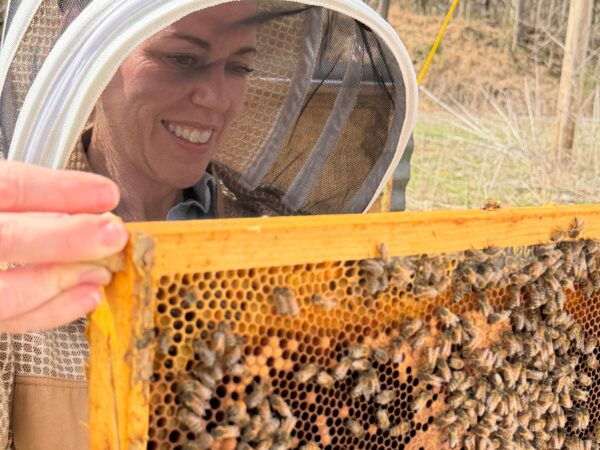
You could also fix a fence or wash your car, paint the porch, make a loaf of bread or cookies for the kids, learn to draw or keep bees (my new hobby this year).
Regardless of what you choose, humans were made with five senses and we are made to make. We will find happiness, wholeness, and health proportionally to the extent we live this out.
6. Get Outside in Nature
Lastly, get outside. As I write this, I am sitting out on my deck, sun warming my back, on an unusually warm late February afternoon. It is glorious. I’m convinced we cannot stay sane if we live indoors all the time. We need sunshine and wind in our hair and grass under our feet.
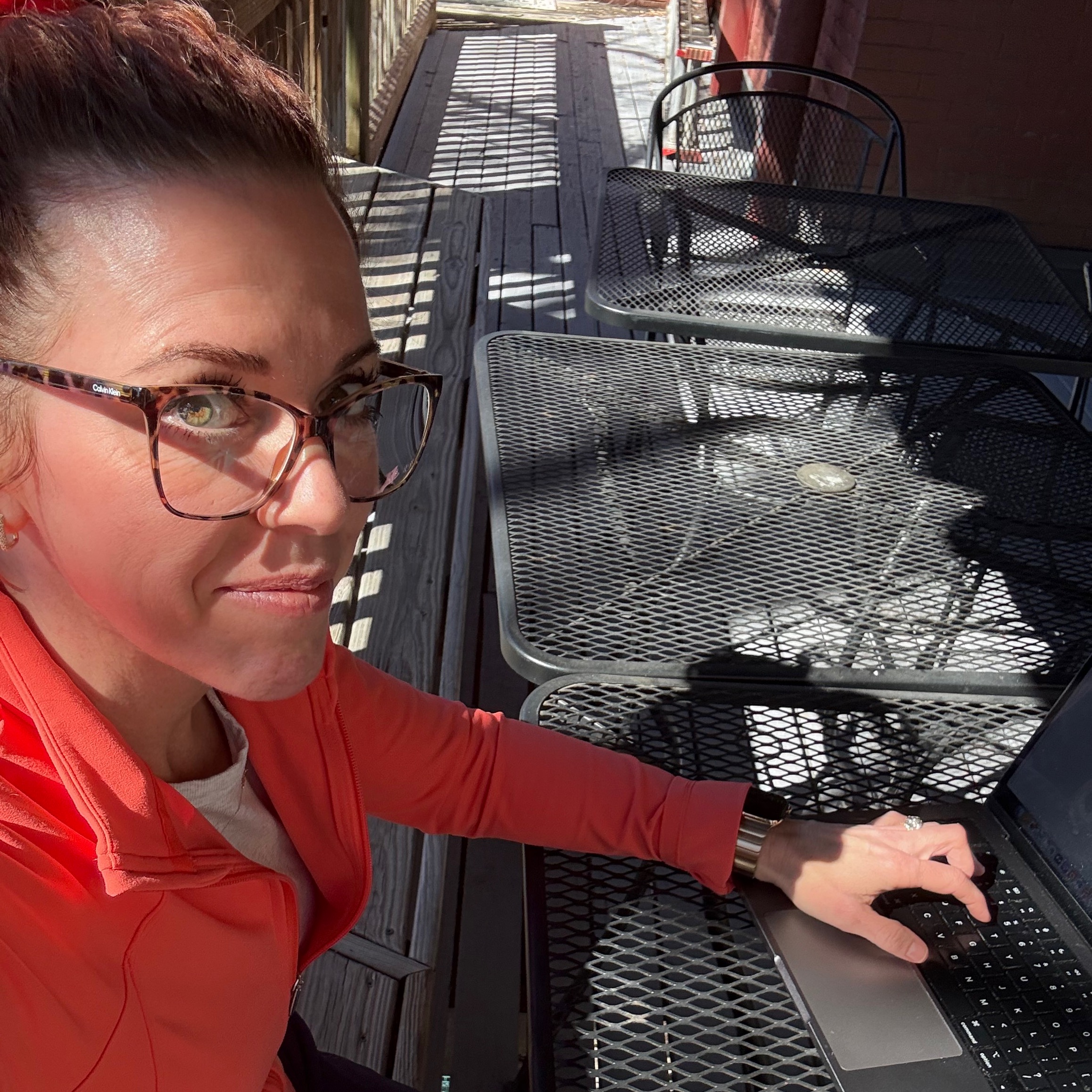
This doesn’t have to be hard. Take one meeting a day on the phone instead of Zoom. Pop in your AirPods and walk and talk. Eat lunch outside. Go for a 15-minute walk when you get home from work.
Or, if you want to go bigger, get outdoors every morning, hike on Saturdays, plant a garden, get a dog (he’ll get you walking).
The point is, we can’t change things we can’t change. We don’t have a prayer of slowing down the rate of change, predicting what the impact of AI will be to humanity or to our humanity, stopping global crises from unfolding, or old orders from crumbling. What we can do is what we can do. Simple, human, physically embodied practices that allow us to stay upright, to maintain equilibrium no matter what happens.
And in the end, though deceptively simple, these things lighten our load. They create mental and emotional space. They reduce our sense of overwhelm because they signal safety to our nervous systems.
The feeling of overwhelm is real. But the largest emotional and cognitive burden is not coming from your to-do list alone. It’s coming from the environment, from the weather. And while you can’t change the weather, you can step into a shelter: the ancient, the beautiful, the true, the real. That’s not everything. But it’s enough to make a difference.
What’s one real, tangible, non-digital thing you’re going to do this week to get your feet back under you?
P.S. Consider the Double Win Mastermind. If you are a female business owner in midlife doing at least $1M in annual revenue and leading a team, I want to extend a special invitation for you to learn more about my exclusive Double Win Mastermind.
This is an intimate group of women who get it: They know what it’s like to navigate the competing demands of business and life outside of work in this season.
I designed this group not only to provide a deep, meaningful community, but also a clear path to leading your business in just 30 hours a week so you have the margin you need to take care of yourself and the people you love well, and enjoy what you’ve worked so hard to build. I’ve been doing it for years and I want to show you how.
To learn more and to see if you qualify, click here.
Last modified on March 24th, 2026 at 9:03 am
Disclosure of Material Connection: Some of the links in the post above are "affiliate links." This means if you click on the link and purchase the item, we will receive an affiliate commission. Regardless, we only recommend products or services we use and believe will add value to our readers. We are disclosing this in accordance with the Federal Trade Commission's 16 CFR, Part 255: "Guides Concerning the Use of Endorsements and Testimonials in Advertising.