


Last week, I got a powerful reminder that one of the best ways to combat overwhelm is to hire an expert. And I got it in an unexpected place: beekeeping.
If you read my recent post about the bee camp experience my kids got me for Christmas, you know I was undecided on whether to move forward with beekeeping as a hobby this year. I loved being with the bees. It was just the kind of embodied, analog, “anchor” I talked about a couple weeks ago, that could help to keep me grounded and centered in a chaotic world.
But I also had a problem.
My Problem and My Breakthrough
At bee camp, I was persuaded that “natural beekeeping”—capturing a swarm of feral bees and not treating or feeding them—was the way to go. Not only is it the healthiest for the bees and those eating their honey, it’s also the surest way to ensure your bees survive the winter, which is otherwise not a given.
Trouble was that the prospect of trapping bees, setting up hives, getting the bee colonies off to a great start, etc., was just all overwhelming. It felt like a tremendous learning curve with a high likelihood of failure. Not exactly what I was looking for in an anchoring activity that was supposed to bring me more joy and peace!
I had decided to punt beekeeping until next spring when I had a thought one day: I wonder if I could get the beekeeping teacher from my workshop to coach me and help me get everything set up?
After all, I do own a coaching company, and as my dad always says, if you want to go further, faster, hire a coach! Duh!
Well, an email and a couple of texts back and forth later, and Adam Martin from BeeKept was pulled up with his wife Leslie out in front of my house, trailer full of hives and traps ready to install in tow.
Instantly, I thought, “Okay, I can do this!” Adam makes it all seem to be commonsense and easy, and like most experts is truly passionate about sharing his love of bees with the world.
Setting Up the Hives
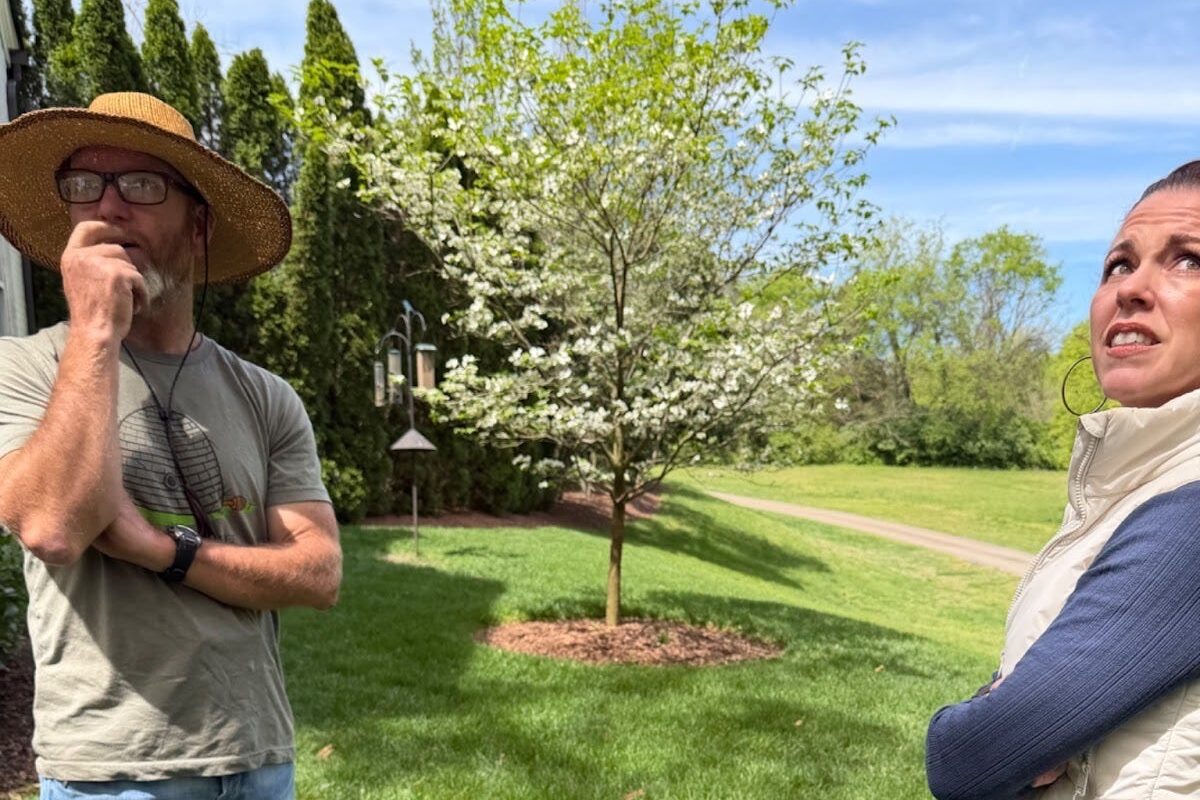
First, we walked around my yard and found the perfect spot for the bees where they would get the right exposure for our climate (not too hot, not too cold) with enough room for us to move around the hives and work around them. We chose a sunny spot on the north-eastern side of my yard that gets morning sun but stays cooler in the hot summer afternoons.
Then, Adam put together the hives.
I am using a horizontal type of hive called a Layens Hive. Think of it like an old-fashioned file drawer. One of main benefits of this type of hive is that, kind of like raised-bed gardening, you don’t have to bend over to work with the bees.
Additionally, once your bees have made you dozens of pounds of honey, and you need to check on your bees, you aren’t lifting 40–50 lb. boxes, so it’s easier on the body long-term. There are many other reasons that this type of hive is beneficial for the bees, but I’ll save that for another day.
The hives were unexpectedly beautiful—made out of 2-inch cedar by a local Amish community—with little pitched roofs.
Baiting the Traps
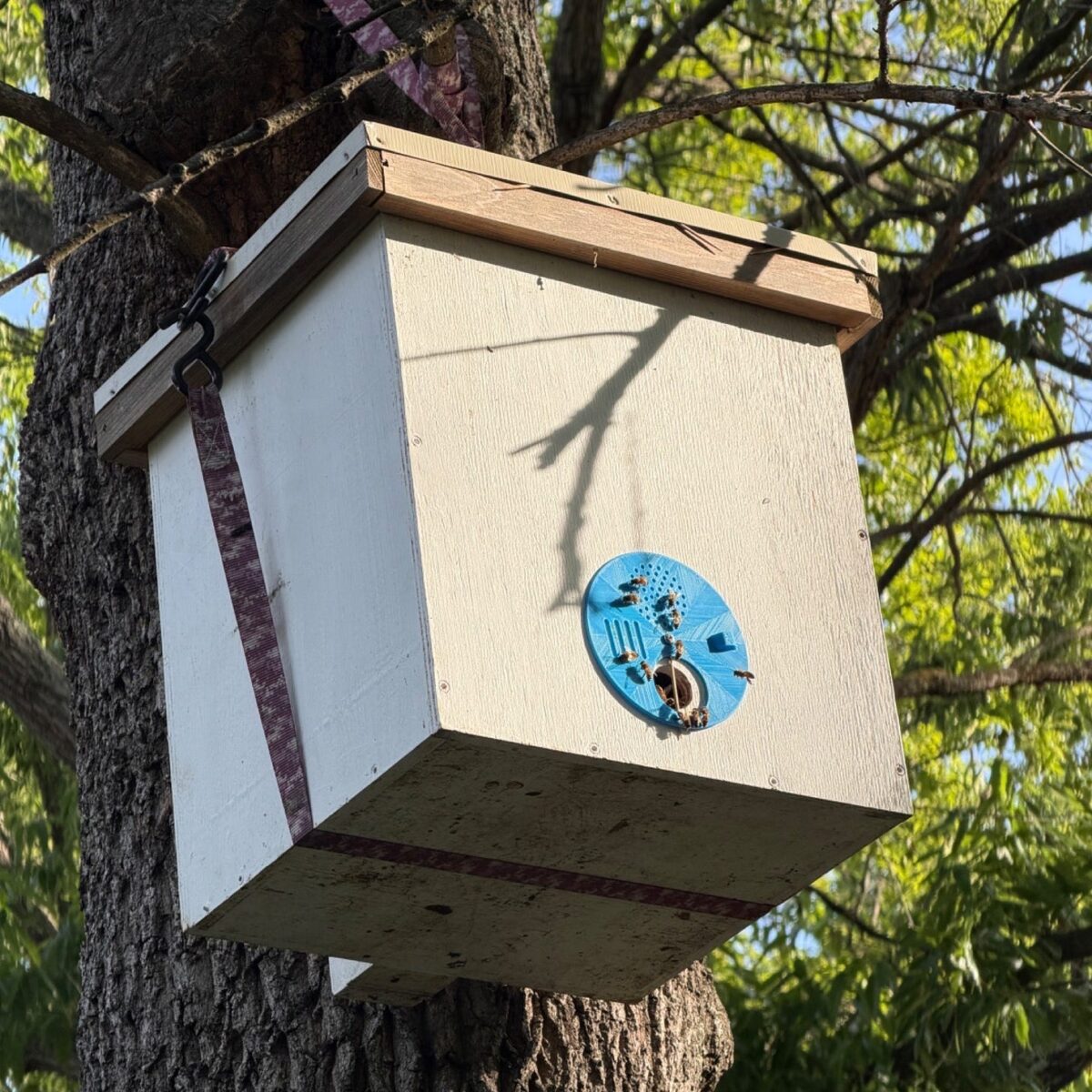
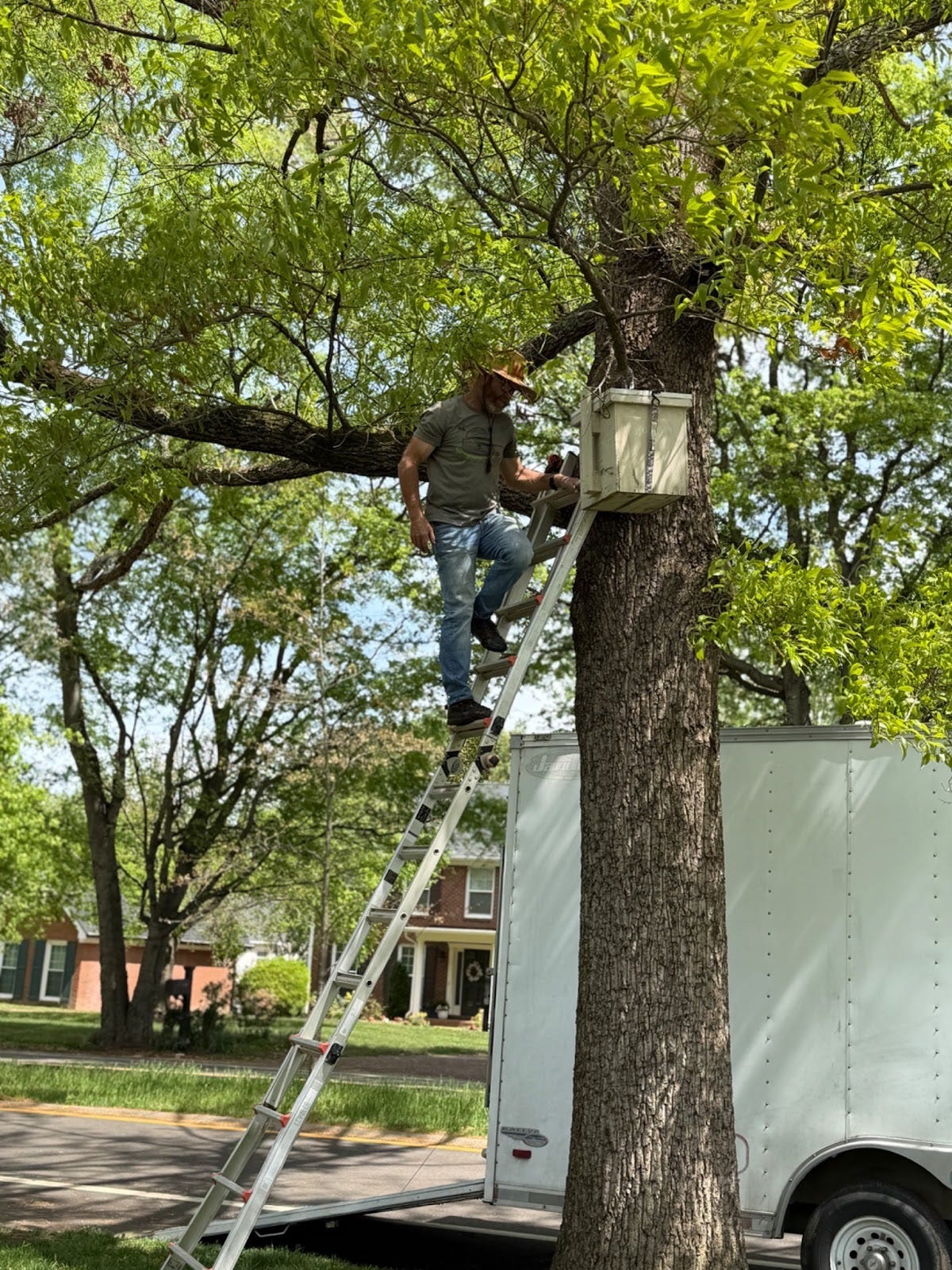
Adam then set about setting up two swarm traps in a couple trees in my yard. Both the hives and swarm traps were “baited” with lemongrass oil and a special spray, both of which mimic a pheromone that attracts bees. We have about a 50/50 chance in each one of capturing a colony, so we should get at least two colonies (the hives were also set up to lure bees). If we are very lucky and get four, I’ll need more hives!
By the way, a swarm of bees is not something that attacks you (at least, not in the way I’m talking about it). A swarm is a colony of bees that has outgrown their home due to a new, baby queen being born. When that happens, the original, mature queen and a portion of her original colony go look for a new home. It’s kind of like a cell dividing. When bees are swarming in the spring like this, they are quite docile because they don’t have anything to protect.
Within an hour of setting up the swarm traps, I already had “scout bees” checking them out, which is a very good sign! You can see them scoping things out in the video below.
What Happens Next
It’s a bit of a process of the bees going back and forth, communicating with their colony about the potential new home, but hopefully in the next few days, I’ll walk outside to see my traps and hives covered in bees making their way inside, like passengers boarding a cruise ship.
Once that happens, we’ll give them about 10 days to get established in the traps (believe it or not, they can actually build their own comb, start accumulating resources—pollen, nectar, etc.—and the queen will start laying eggs in just a matter of days!) before eventually moving them to their permanent home in the hives.
For you bee geeks out there, since my traps are further than 3 feet away from my hives, the bees will have to be taken to Adam’s property to be “reoriented” before being moved into the hives. Bees have a finely tuned sense of direction, and if they get moved more than 3 feet from their hive (in this case, the trap), they will try to return over and over unless they are taken away 3 miles or more where their sense of direction can get recalibrated.
So, within 2–3 weeks, we should be fully up and running. By next June, these two hives should produce about 70–100 lbs, or 30 quarts of honey—and we might even get a second harvest in the fall.
The Lesson
The big lesson for me in all this, and I think the takeaway for you too, is that when you find yourself overwhelmed, your instinct is going to be to either throw in the towel or double-down and try to figure it out yourself through trial and error with whatever limited resources and experience you have on board at the moment.
In general, both of those options lead to pain and frustration.
But! There is a third option: Don’t go it alone. Hire a coach whenever possible. One of the things that separates people who regularly succeed from those who struggle is that the successful people employ coaches. They rarely take the DIY approach, because they know it almost always proves to be more expensive in the end.
The really successful people employ coaches for almost anything they want to learn or optimize, whether personal or professional.
While I think there is absolutely a place for challenging yourself to push through the hard, most of us don’t need to go looking for opportunities to build that muscle, do we? There are countless circumstances outside of our control that force us to dig deep and grow through failure and difficulty.
My personal opinion as both a leader and a coach (not to mention just as a person!) is that when there’s a chance to bypass the “long way around the barn” with all the pitstops of frustration and suffering along the DIY path to learning anything, I’m going to do it.
That’s what this beekeeping adventure has reminded me of. A lot of things that keep us stuck, paralyzed, or separated from the breakthroughs we most want can easily be resolved with the right expert, the right coach.
Find Your “Someone”
One of the most powerful lessons I learned from my dad (who learned it from his dad, my 91-year-old grandpa) is that, “Someone, somewhere already knows how to do the thing you’re trying to do.” All you’ve got to do is find them.
Knowing that we get to be that “someone” at Full Focus for our Double Win Coaching and Double Win Mastermind clients is one of my greatest joys, because I know what coaching has meant to my life, and how it’s enabled me to do things I could never have done otherwise.
So, if you’re facing a challenge, whether it’s learning a new hobby like me, solving a marriage problem, resolving a business issue, reducing overwhelm, or improving your health, learn from my example and push through smarter not harder by finding a coach, whether you just need accountability or expertise to help you get the breakthrough you deserve.
What’s one area in your life where you need a breakthrough?
Last modified on April 28th, 2026 at 9:30 am
Disclosure of Material Connection: Some of the links in the post above are "affiliate links." This means if you click on the link and purchase the item, we will receive an affiliate commission. Regardless, we only recommend products or services we use and believe will add value to our readers. We are disclosing this in accordance with the Federal Trade Commission's 16 CFR, Part 255: "Guides Concerning the Use of Endorsements and Testimonials in Advertising.