



A couple weeks ago, I had an experience that landed on my “Life Top 10 List.” I caught a swarm of wild bees in my front yard. Bear in mind: I am not a homesteader living on many acres of land. I live in an ordinary neighborhood on less than a quarter of an acre.
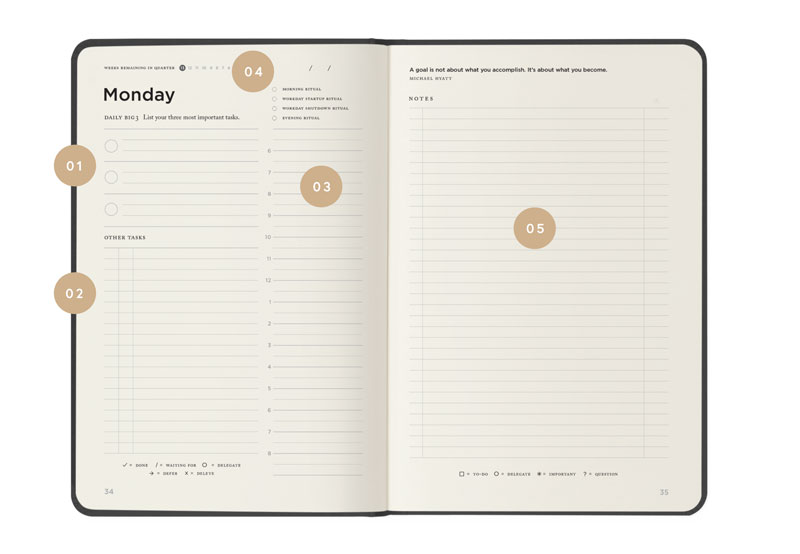
If you’ve been following along, you know I’ve jumped into beekeeping with both feet in the last month or so. I’m not only fascinated by bees, I am also grounded by them—two things I need more of as I build analog rhythms to anchor me amidst the digital realities of my work and life.
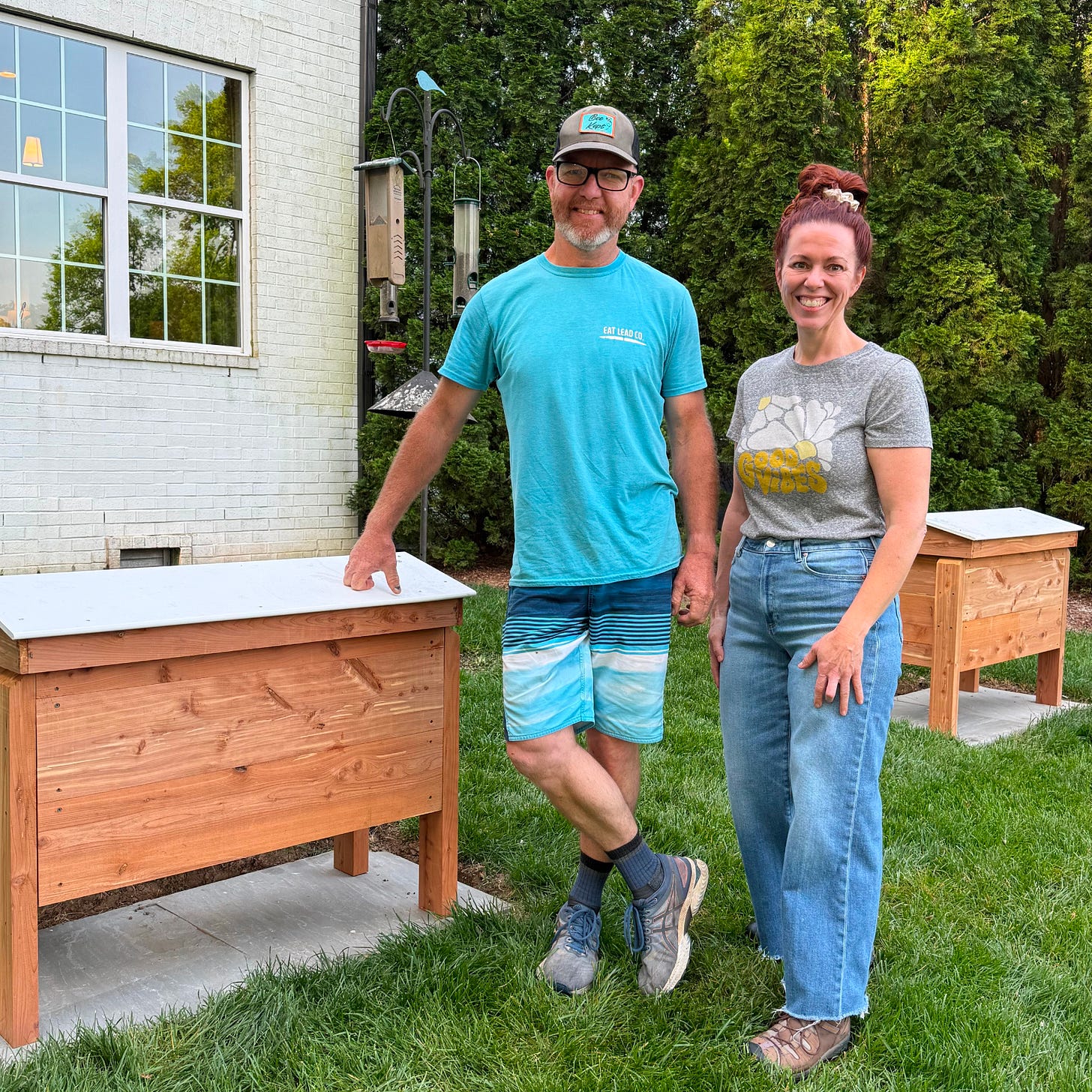
Several weeks ago, I wrote about attending a local bee workshop with my now bee mentor, Adam Martin of BeeKept. Then, I wrote about Adam coming out to set up two hives and two baited swarm traps on our property. The hives were baited too, which meant we had four chances to catch a wild swarm of local, native bees looking for a new home.
About 12 days ago, we got our first swarm!
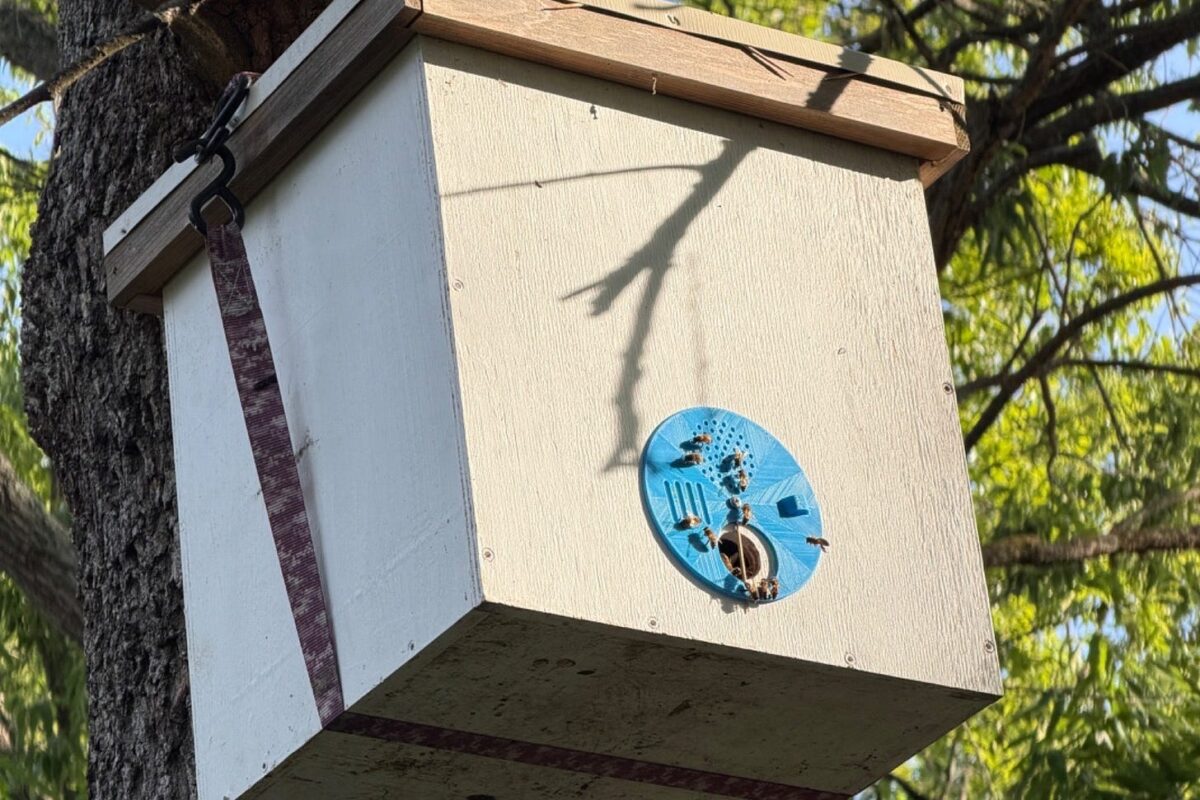
It was a balmy, slightly breezy afternoon. Scout bees had been visiting one of the baited traps all day. Noticing the increased activity, Joel and I got up from our garden adirondack chairs where we’d been enjoying the sunny afternoon and went to investigate.
I noticed way more bees—probably hundreds—near the trap. Then, all of a sudden, I heard a loud buzzing and a literal cloud of bees came across the yard out of nowhere. THEY WERE HERE!
High above our heads, thousands of bees descended on the trap, covering the majority of the front of the box and hanging off the bottom. They were like living chainmail, clinging to one another as they waited to move into their new home.
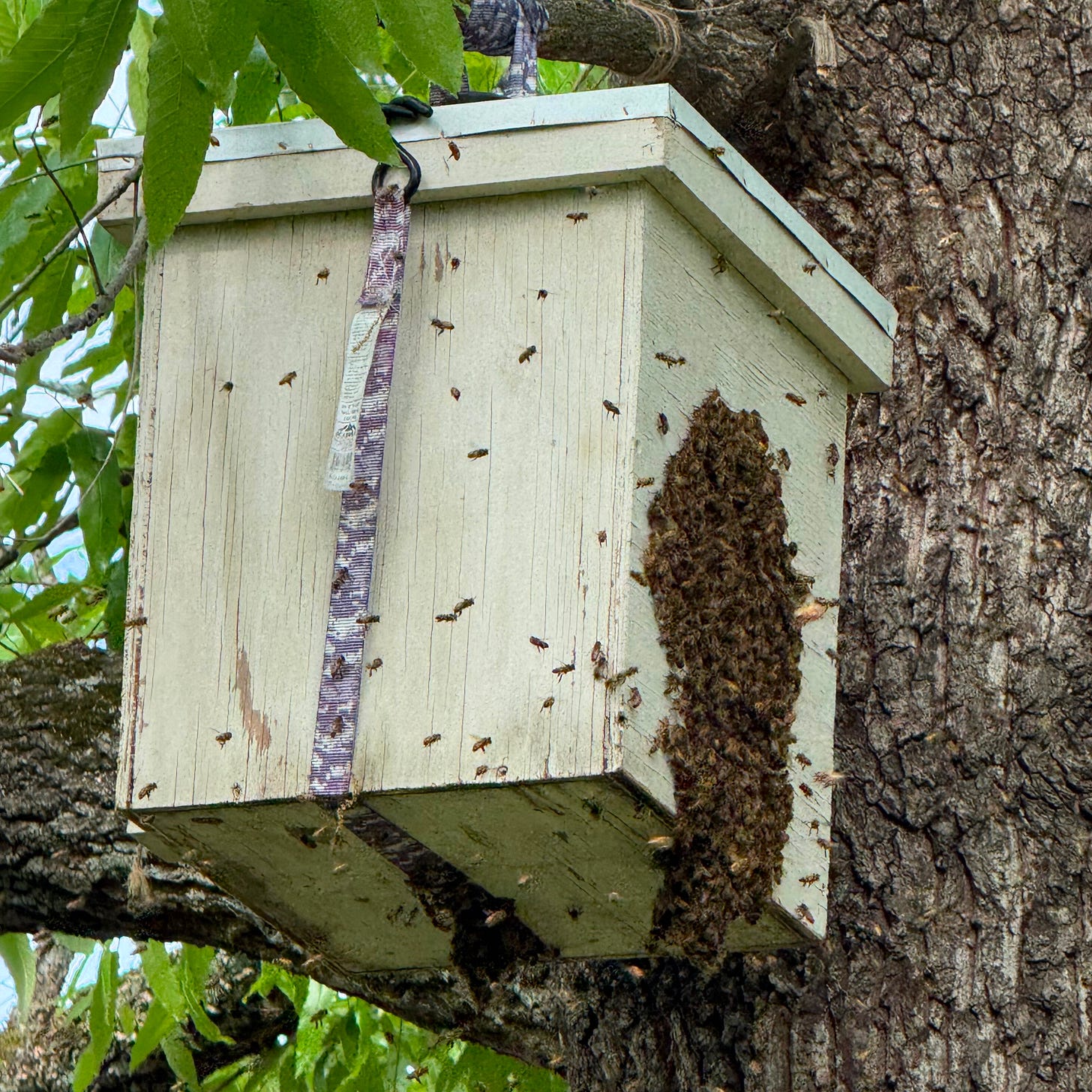
It was unbelievable. I managed to call my mom and sisters (who live nearby) to come over and before I knew it, I had a yard full of onlookers watching the little miracle take place. In about 20 minutes, an estimated 10,000 bees had made their way inside the eight-frame swarm trap. It felt like we had been sucked into a nature documentary!
Then, we waited.
Bees need about ten days to “set up shop” in their temporary hive before they can be transferred to their “forever hive.” In that time, they make comb (they started with nothing but wire and a wooden frame), the queen lays eggs, and the foragers bring resources back to keep everyone fed with nectar and pollen.
As I’ve shared before, one unique characteristic of bees is their finely tuned GPS system. Bees use their unique “vector-based navigation” to find their way back to their hive when they fly up to two miles away in search of water or food. It’s amazingly precise. So precise that if you move a hive full of bees more than three feet, they literally get lost, which would defeat the whole purpose of trapping them in the first place.
To induce a sort of “GPS amnesia,” the rule of thumb is that a colony of bees must be taken at least three miles away from their original hive to forget it and recalibrate. It’s kind of like wiping your computer’s hard drive! After 24–48 hours in an offsite location (in our case, Adam’s farm about an hour away), they can be brought back into my yard and placed in their forever hive across the yard without them trying to return to their original tree in confusion.
So, Adam came out at “sundown,” put a ladder up against the tree with the trap full of bees, climbed up, shut the opening, unhooked the ratchet strap from the branch it was hanging on, and brought the box down.
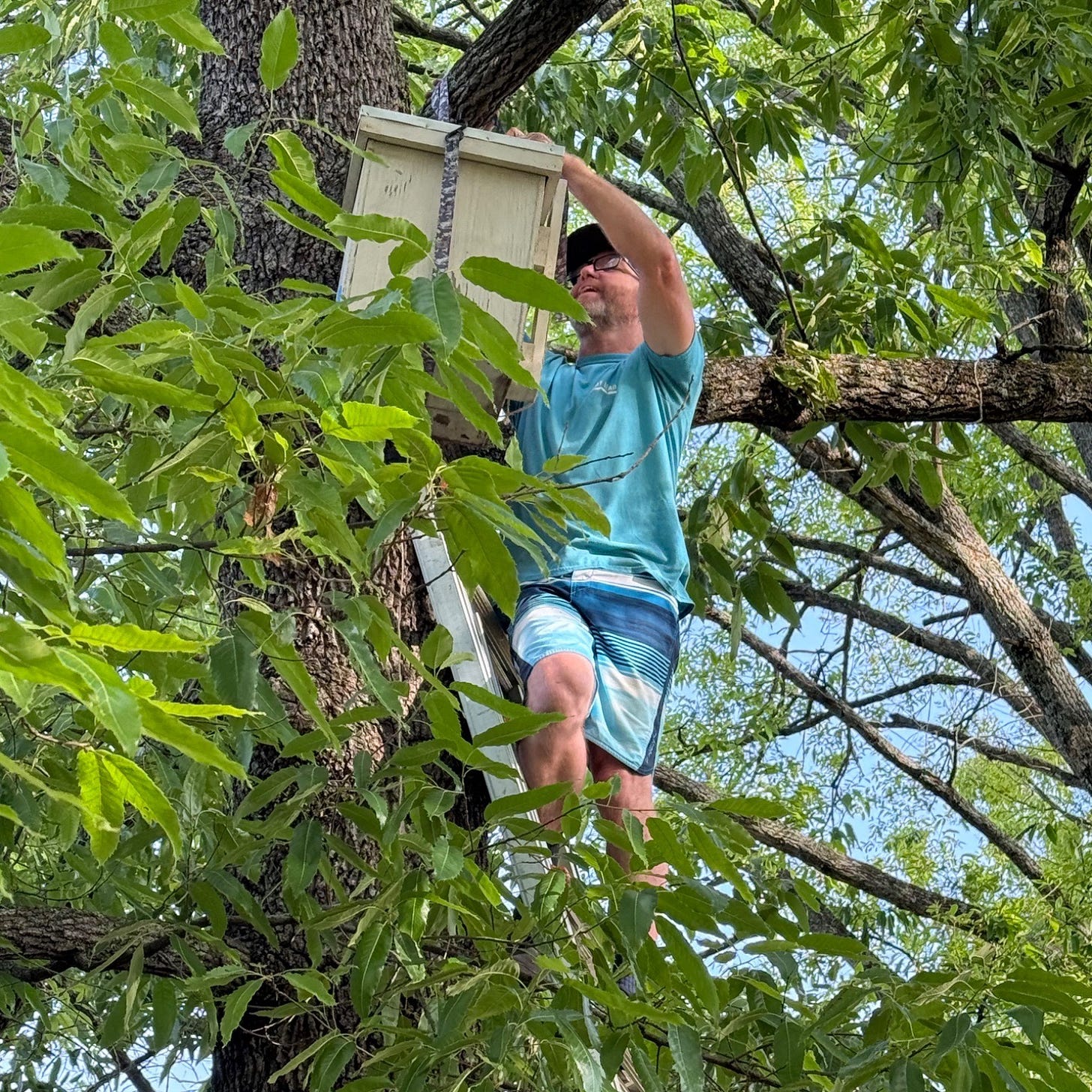
He then proceeded to buckle them into the backseat of the car for their journey to their offsite reboot. (Yes, he drove an hour home with 10,000 bees in the backseat—apparently without incident.)
Then, ten days later, he put the same bees back in the car to bring them to their forever home in their hive outside my kitchen window.
Once again, a small group of neighbors and family members filled my side yard, eager to see what would come out of that box. Had the bees made comb? How many of them were there?
We all nervously stood back and gave Adam and the bees their space. One by one, he pulled each frame from the box, lifting it up to the light to see what was inside.
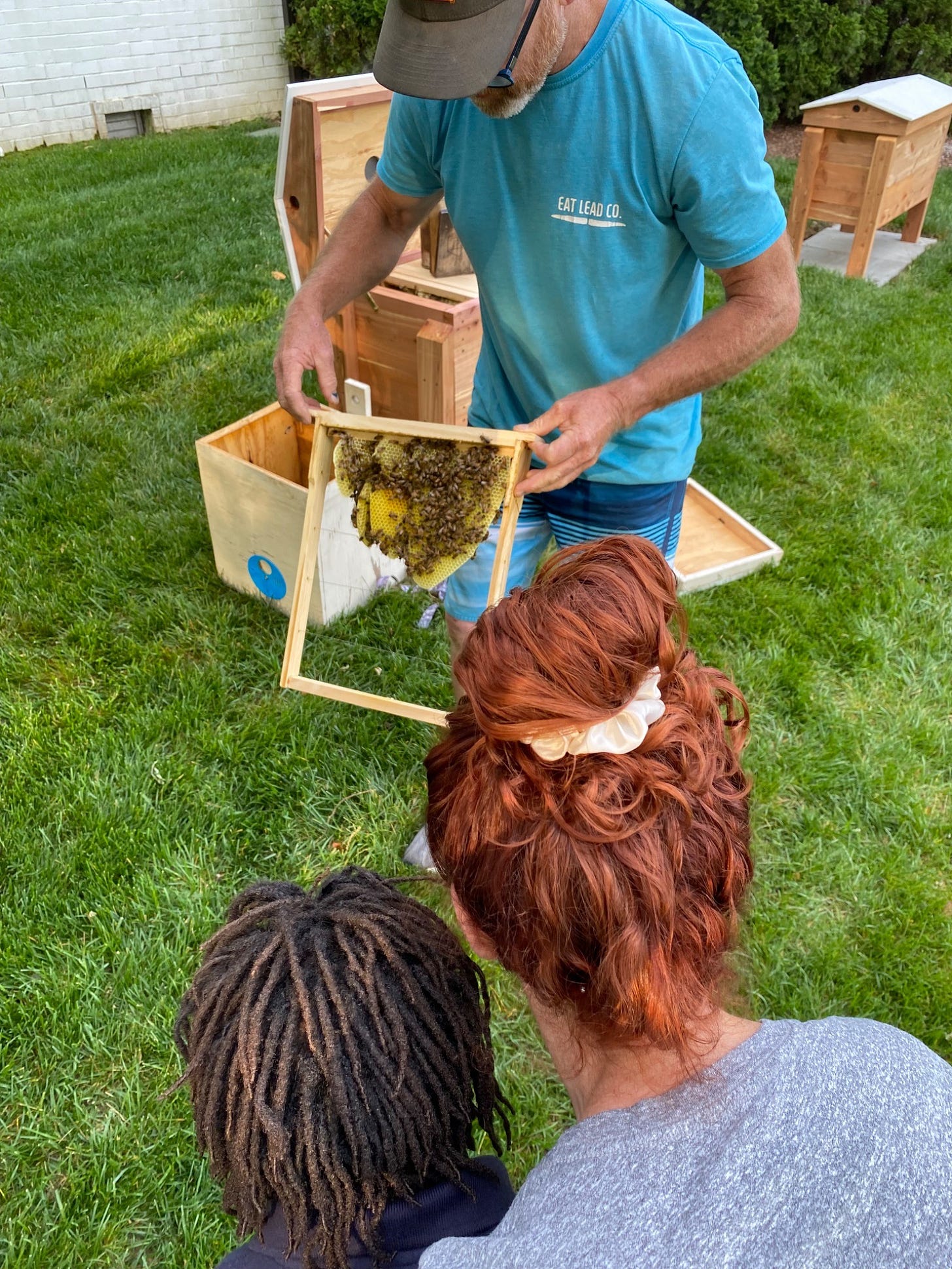
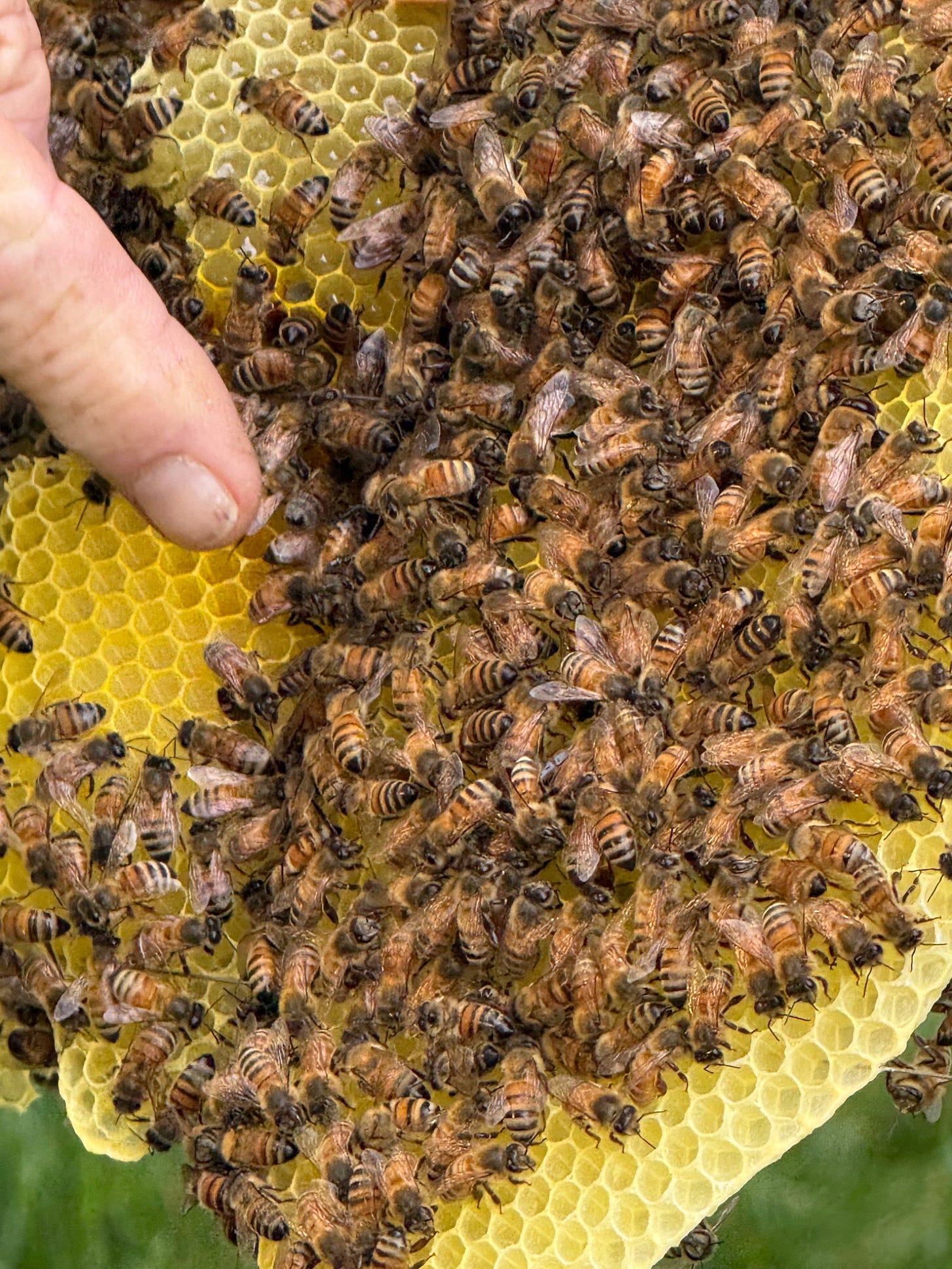
It was impressive to see how much progress they had made on their “buildout” in just ten days! They had a healthy broodnest of baby bees started and nectar and pollen stored. We even got to see the queen before everyone got tucked into the hive to settle in.
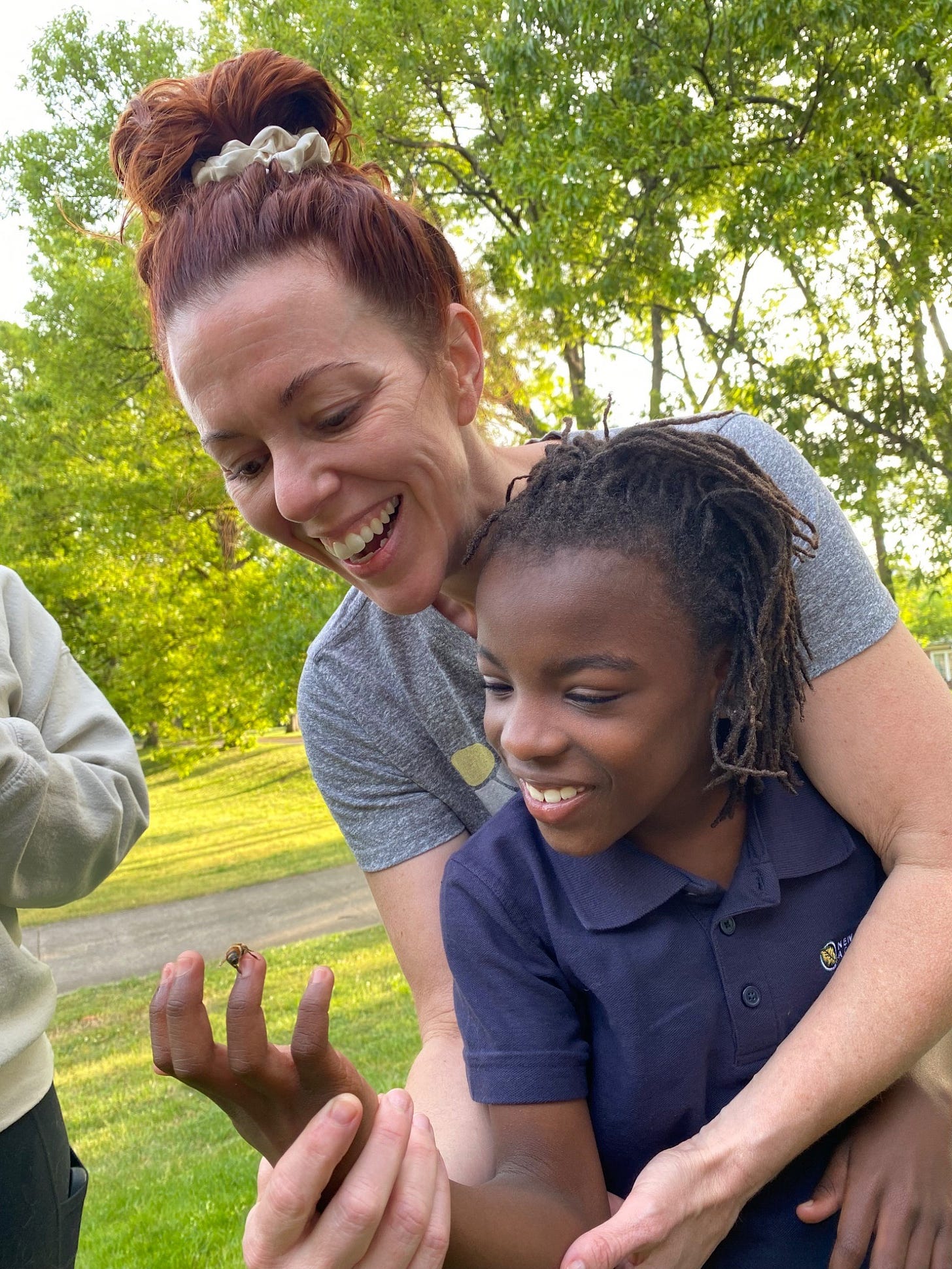
Naomi’s highlight was getting to make friends with a drone bee—the only bee without a stinger—who ate nectar off her hand for about 20 minutes. She was enraptured with him. I had to break her heart by telling her that, no, we would not be able to keep him indoors as a pet and had to return him to the hive with his fellow bees.
In the days that followed, the bees acclimated themselves to their new home by doing “orientation flights” in which they memorize the hive’s location and surrounding areas and calibrate their GPS systems. Best of all, we got to observe their activity throughout the day right from our kitchen window.
This foray into beekeeping has truly been one of the most wonder-full experiences of my life. Every part of it has left me awestruck by just how magical the created world is. After all, these bees are wild, and I have only played a small part in their entry into our lives. Most of the work they did all on their own with an intelligence that boggles the mind.
It got me thinking about how many happenings like this are going on all around us all the time that we just miss—because we’re hurrying without taking time to notice or staring down at our phone instead of looking up at the world. We miss the wonder that’s there to be enjoyed.
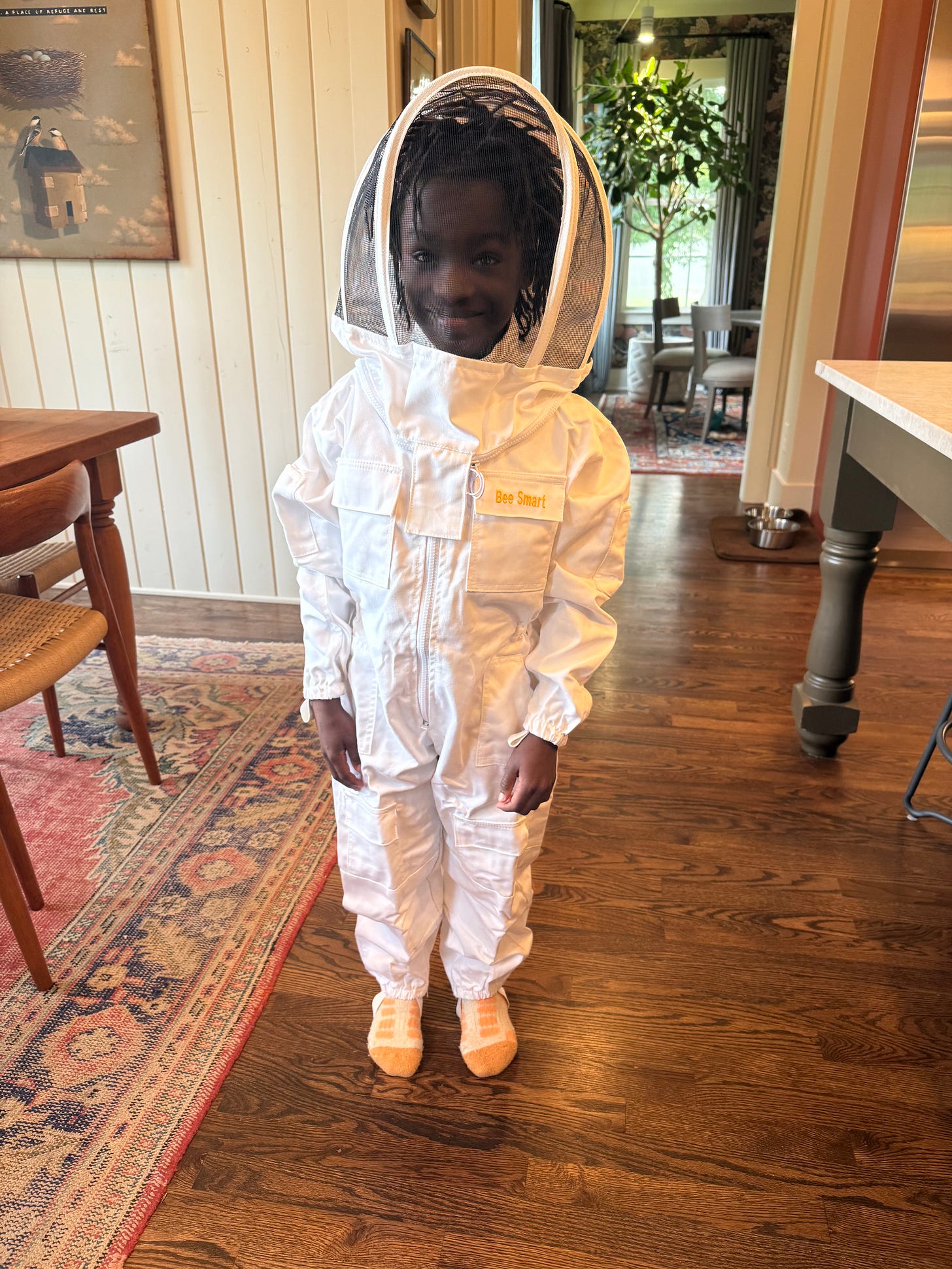
Wonder is food for the soul. It rightly orients us as creatures within creation. It makes us feel small in the best and healthiest of ways. It reminds us that there is so much we don’t and can’t understand. It reminds us that so little depends on our effort, contrary to our default, individualistic, self-reliant paradigm.
All of that leads to gratitude. To worship, even. To that sense that we are the beneficiaries of good things we neither earned, nor fully comprehend, nor are owed, but are invited to take joy and delight and nourishment in nevertheless.
We all know we need to “practice gratitude.” But that can sometimes feel forced or even inaccessible. What if, instead, we cultivated our sense of wonder by noticing the world around us—not as a given, but as the miracle it is? Wouldn’t we be moved to gratitude naturally?
This practice requires us to move through the world at a slower pace with eyes wide open, paying attention to our surroundings instead of our phones. It requires us to give our attention to things that don’t produce an immediate dopamine hit, but are ultimately far more satisfying.
Reconditioning our minds and hearts takes time and intention, but it gives back so much more.
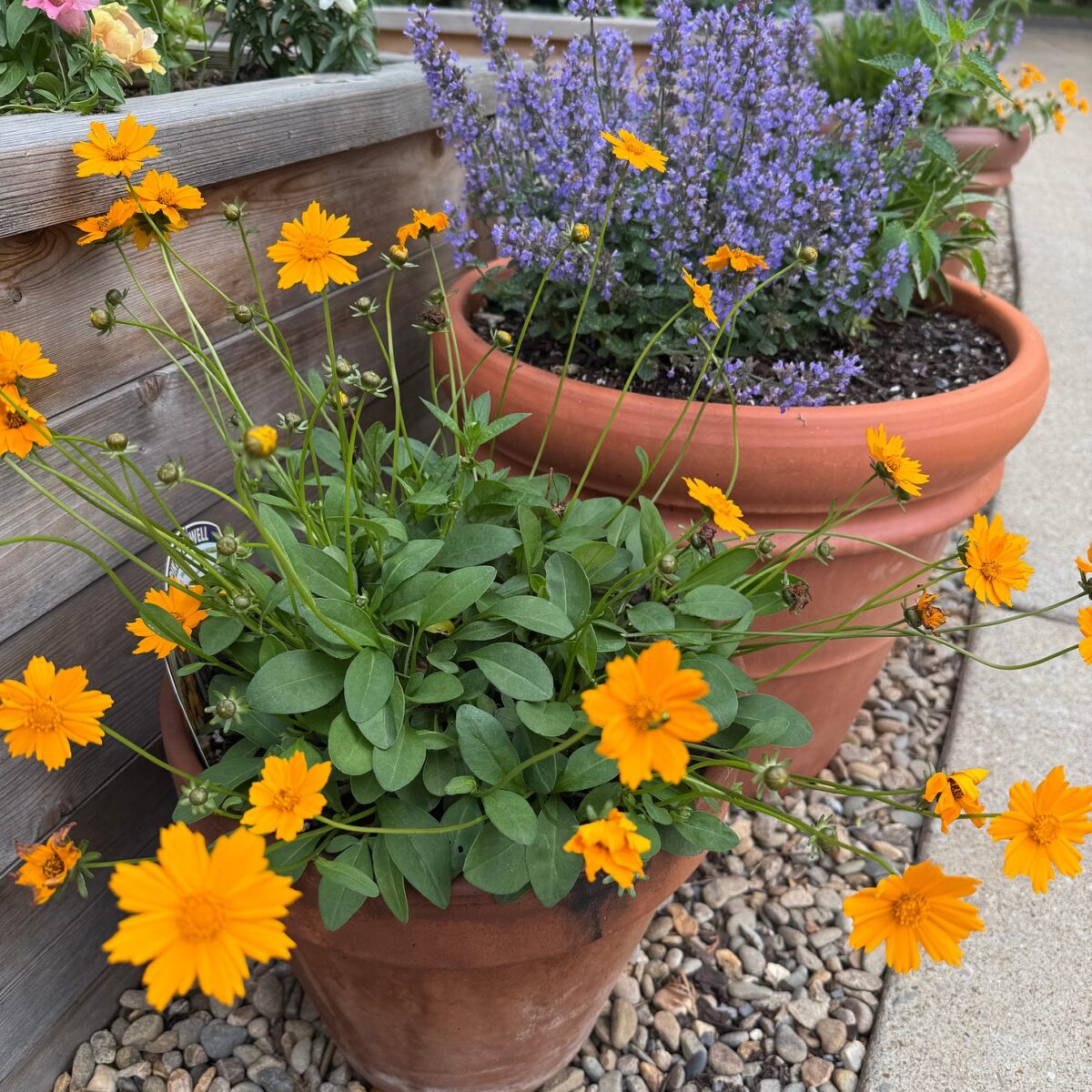
That’s why, in this season, I am deliberately looking for opportunities to build a robust analog life that presents me many opportunities in my daily life to practice wonder and cultivate the sustained attention that wonder requires. That’s what the bees are about. That’s what the garden is for. That’s why there’s a birdfeeder outside my kitchen window. And, hopefully, all of this is just the beginning.
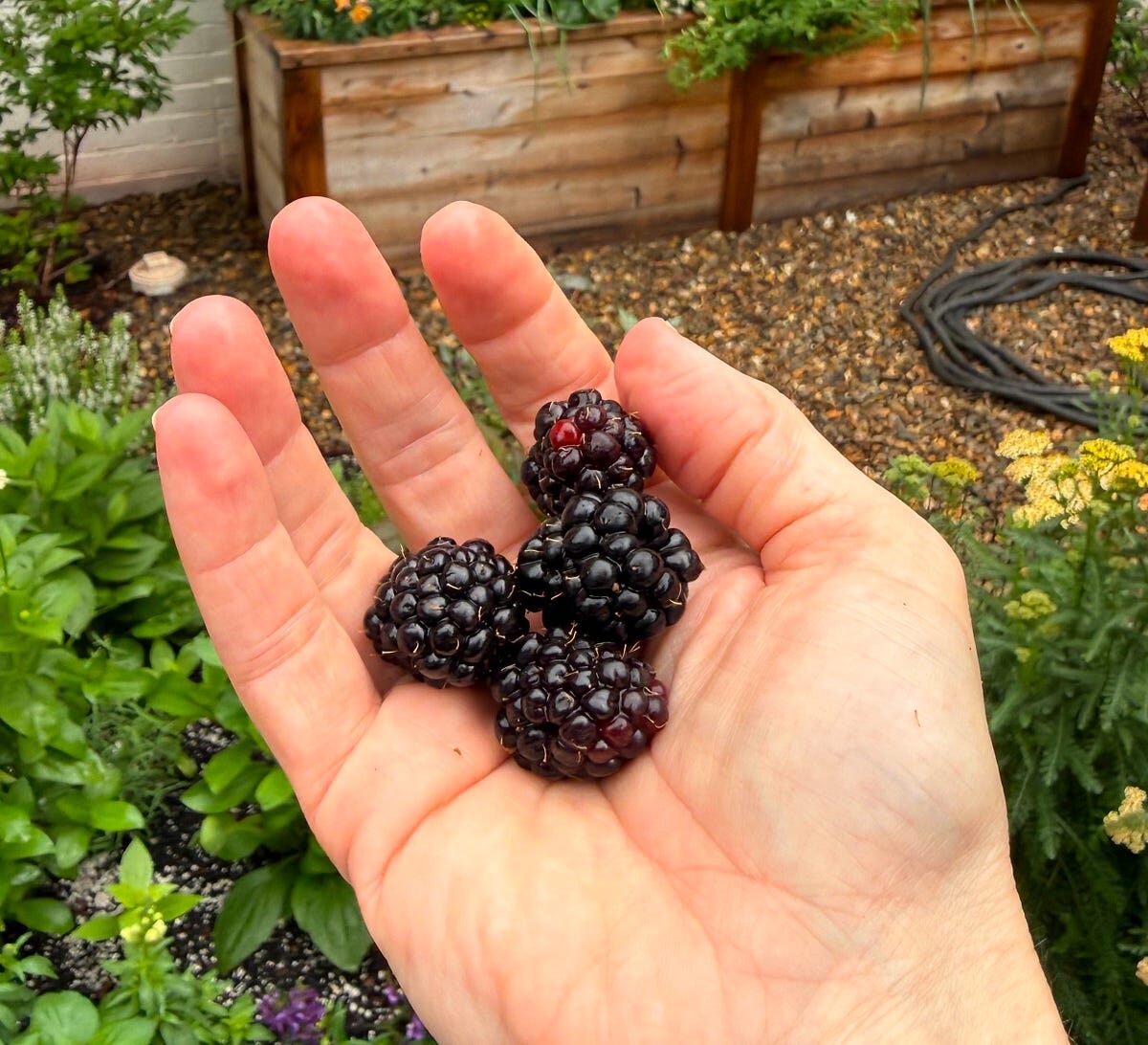
Put together, these little moments of watching the bees, identifying a new bird, or picking a warm, ripe strawberry from my own bed lead to the restoration, reordering, and re-membering of my humanity. They lead me to flourish, even when life is hard, and scary, and unpredictable, as it often is for me (and probably for you too).
We don’t have to wait until our lives look perfectly the way we want them to. We can wonder now, we can flourish now—by being present, by noticing the good things all around us, and by giving thanks for them.
So, let me ask you this, where do you find that sense of wonder in your life? And, what does it do for your heart and soul?
Last modified on May 3rd, 2026 at 10:45 pm
Disclosure of Material Connection: Some of the links in the post above are "affiliate links." This means if you click on the link and purchase the item, we will receive an affiliate commission. Regardless, we only recommend products or services we use and believe will add value to our readers. We are disclosing this in accordance with the Federal Trade Commission's 16 CFR, Part 255: "Guides Concerning the Use of Endorsements and Testimonials in Advertising.